

Cookware Tech &
Kitchen Knowledge.
Discover expert tips, non-stick maintenance guides, and manufacturing insights.
View Catalogue
Crafting Quality
Since 1990.
Learn how Kiam engineers durable pressure cookers and appliances.
About Factory
Export News &
Market Trends.
Valuable trade resources for international kitchenware buyers and distributors.
B2B EnquiryChoosing the China Best Die-Cast Aluminum Casserole for global buyers requires more than comparing factory prices. It demands evidence, testing, and practical cooking experience. The International Aluminium Institute reported approximately 70.6 million tonnes of primary aluminum production in 2023. That scale shows aluminum’s importance, but it does not prove every casserole supplier performs equally. Small details matter.
A reliable evaluation should examine alloy consistency, casting porosity, base flatness, wall thickness, handle strength, and coating adhesion. A well-made Die-Cast Aluminum Casserole should heat evenly, resist warping, and remain comfortable during repeated kitchen use. Buyers should request thermal-cycle records, coating test results, food-contact declarations, and traceable batch information. Relevant requirements may include EU Regulation (EC) No. 1935/2004 and applicable U.S. FDA food-contact provisions. These references support responsible sourcing, although they do not replace independent verification.
Market research from Grand View Research identifies cookware as a growing consumer goods category, supported by demand for durable and convenient kitchen products. Meanwhile, the World Bank’s Commodity Markets Outlook shows why aluminum price movement can affect long-term purchasing costs. The lowest quotation may become expensive after freight, defects, returns, and delayed inspections. This is easy to underestimate. Supplier capability also matters: mold maintenance, automated casting control, experienced quality staff, and export documentation can determine the final result. No supplier ranking is perfect. A sample may look impressive while hiding coating weakness or uneven heating. Global buyers should therefore compare tested performance, production transparency, customization capacity, and total ownership cost before naming one Chinese manufacturer the best.
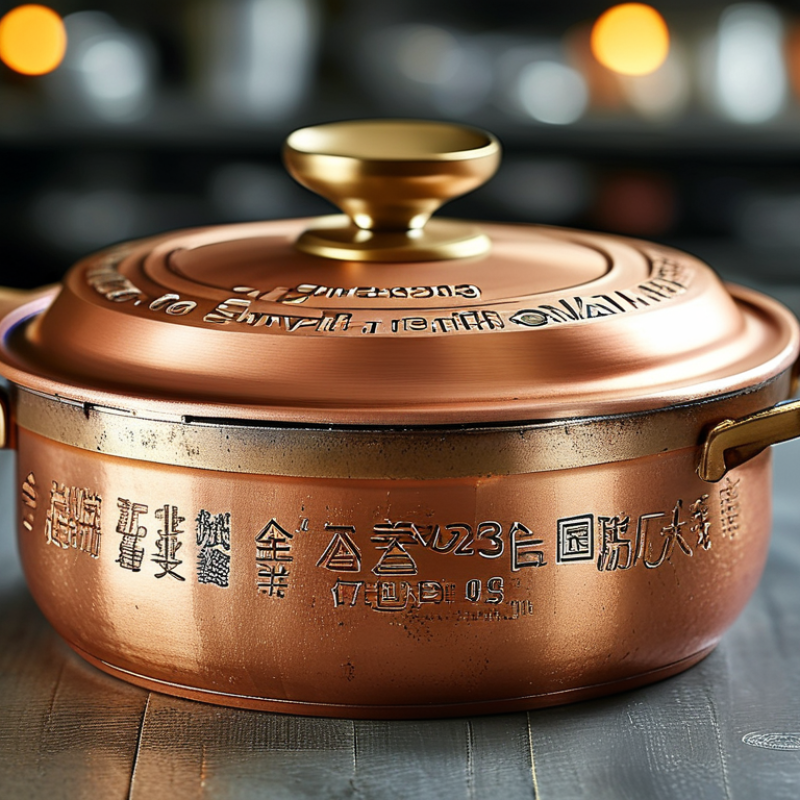
What Is a Die Cast Aluminum Casserole?
A die cast aluminum casserole is cookware formed by injecting molten aluminum into a precision steel mold under high pressure. This process creates consistent walls, clean edges, and detailed handles. Unlike pressed aluminum, die casting supports stronger shapes and integrated features. The finished body feels lighter than cast iron, yet it can distribute heat quickly across the base.
The material choice also reflects wider industry practice. The U.S. Department of Energy states that aluminum weighs about one-third as much as steel by volume. The U.S. Geological Survey reported approximately 70 million metric tons of global primary aluminum production in 2023. These figures show aluminum’s strong industrial supply and weight advantage. However, performance still depends on wall thickness, base design, surface treatment, and lid fit. More metal does not always mean better cooking.
Tips: Ask for heat-distribution tests, dimensional drawings, coating specifications, and sample inspection records. Check the casserole on a flat surface. A small wobble matters. Avoid judging quality from appearance alone. In real purchasing work, I have seen attractive samples fail during repeated heating because their handles were poorly designed. This is an imperfect detail, but it deserves attention. NADCA technical guidance also emphasizes controlled filling, cooling, and porosity management in die casting. A reliable supplier should explain these controls clearly, not hide behind polished photographs.
| Data Dimension | Typical Data or Specification | What Global Buyers Should Check |
|---|---|---|
| Product Definition | A casserole pot formed by injecting or pressing molten aluminum alloy into a reusable metal mold under pressure. | The pressure-casting process generally provides a more consistent shape and thinner, more uniform walls than many gravity-cast products. |
| Main Material | Food-contact aluminum alloy, commonly selected for castability, thermal conductivity, strength, and corrosion resistance. | Request the exact alloy designation and food-contact documentation applicable to the destination market. |
| Common Capacities | Approximately 1.5 L, 2.5 L, 3.5 L, 5.0 L, and 7.0 L. | Capacity should be verified by a calibrated water-volume test because usable cooking volume is lower than the maximum rim-to-rim volume. |
| Typical Diameter Range | Approximately 18 cm to 32 cm, depending on capacity and design. | Confirm internal cooking diameter, external diameter, lid diameter, and packaging dimensions separately. |
| Typical Wall Thickness | Approximately 2.5 mm to 5.0 mm for the main body; the base may be reinforced. | A thicker base can improve heat distribution and resistance to deformation, but it may increase product weight and cost. |
| Weight Range | Approximately 1.0 kg to 3.5 kg for the pot body and lid, depending on size, wall thickness, handles, and lid material. | Use an approved production sample for final weight confirmation and freight-cost calculations. |
| Heat Distribution | Aluminum has high thermal conductivity compared with common stainless steel cookware, allowing relatively fast heating. | Ask for a heating-uniformity test if the product will be marketed for low-oil cooking or temperature-sensitive recipes. |
| Cooking Surface | Usually coated with a non-stick system, or supplied with an uncoated, anodized, or other treated interior depending on the design. | Confirm coating type, number of layers, abrasion resistance, release performance, and food-contact test results. |
| Typical Non-Stick Structure | Common systems use a primer, intermediate layer, and topcoat; exact construction varies by coating supplier and product specification. | Do not rely only on the term “non-stick.” Request coating thickness, test method, and durability results. |
| Cooktop Compatibility | Usually suitable for gas, electric, and ceramic cooktops when the base is correctly designed; induction requires a magnetic stainless-steel base or compatible induction structure. | Induction compatibility must be confirmed by an actual heating test on the target cooktop system. |
| Oven Compatibility | The aluminum body can tolerate oven cooking, but the practical temperature limit depends on the coating, handles, knobs, lid, and seals. | Specify the maximum oven temperature for the complete assembled product, not only for the bare aluminum body. |
| Lid Options | Tempered glass lids, cast aluminum lids, or other heat-resistant lid constructions may be used. | Check lid fit, steam-vent design, handle temperature, impact resistance, and replacement-lid availability. |
| Handle Options | Side handles may be cast, riveted, screwed, or attached using other mechanical methods; materials can include aluminum, stainless steel, or heat-resistant polymers. | Evaluate handle strength, attachment security, grip temperature, clearance from the cooktop, and dishwasher exposure. |
| Surface Finish | Common finishes include painted exterior, spray coating, polished areas, anodized treatment, or a textured decorative finish. | Define color tolerance, gloss level, coating adhesion, scratch resistance, and acceptable cosmetic limits before mass production. |
| Dimensional Tolerance | Production tolerances depend on the mold, casting design, machining, coating thickness, and inspection method. | Use an approved drawing with critical dimensions for lid fit, base flatness, handle position, and nesting or stacking requirements. |
| Base Flatness | A stable, reasonably flat base is required for safe contact with the cooktop and consistent heat transfer. | Request a base-flatness inspection after coating and finishing, because distortion can occur during processing. |
| Food-Contact Compliance | Testing may cover heavy-metal migration, coating constituents, and overall food-contact safety according to the destination market. | The required documentation may differ between the European Union, United States, United Kingdom, and other markets; specify the applicable regulations in the purchase order. |
| Common Quality Tests | Visual inspection, dimensional inspection, coating adhesion, abrasion or release testing, handle-load testing, lid-fit testing, and heat-cycle testing. | Create a written inspection plan with sampling levels, test conditions, acceptance criteria, and corrective-action requirements. |
| Packaging Considerations | Typical packaging includes protective separators, a polybag or paper wrap, an inner box, and an export carton. | Confirm drop protection, moisture resistance, carton dimensions, barcode requirements, pallet configuration, and packaging-material regulations. |
| Important Buyer Warning | “Die cast aluminum” describes the forming process and material category; it does not by itself guarantee coating quality, induction performance, durability, or regulatory compliance. | Compare complete technical specifications, verified samples, inspection records, and destination-market compliance documents before placing a production order. |
FAQS
Aluminum alloy is melted above 650°C in a furnace. The liquid metal enters a preheated steel mold under high pressure. This forms thin walls, rounded corners, and lid grooves quickly. Small mold errors can create weak edges.
Thicker cast walls can reduce hot spots during simmering and roasting. They also improve the casserole’s solid feel. Still, excessive weight can make lifting uncomfortable. Balance matters.
Check the base flatness, wall thickness, rim smoothness, and surface finish. Inspect the inner surface under bright light. Small pits may suggest porosity or weak finishing control. Photographs often hide these details.
Request coating specifications and adhesion test results. Do not judge thickness only by appearance. Check the rim, corners, and handle connection areas carefully. A new sample may look perfect. Repeated washing may disagree.
Confirm the base design and request specific compatibility test results. Do not assume every aluminum casserole works on induction plates. A flat base also improves heat contact. The design must support it.
Useful checks include thermal cycling, cooking simulations, dimensional testing, and repeated washing. Inspect coating adhesion and heat resistance. Compare several samples from different batches. One sample is not enough.
Ask for material information, coating details, migration reports, and batch traceability. Request inspection records and clearly written acceptance standards. Independent laboratory reports are preferable when available. Verbal promises are weak evidence.
Long-distance shipping can damage corners, lids, and polished surfaces. Packaging should resist drops and compression. A flawless casserole can still arrive scratched or warped. Packaging matters.
Review corrective-action records, rejected-unit procedures, and shipment history. A factory with clear answers may be safer than one offering only a low price. Factory visits or third-party audits can expose process gaps. No evaluation is perfect.
Conclusion
A Die-Cast Aluminum Casserole is a durable cookware product formed by injecting molten aluminum into a precision mold. This manufacturing method creates even wall thickness, reliable heat distribution, and a strong structure suitable for everyday cooking. In China, manufacturers typically combine mold design, aluminum casting, surface finishing, nonstick coating, assembly, and quality inspection to produce casseroles in different sizes and configurations for international markets.
For global buyers, key evaluation points include material consistency, coating performance, heat resistance, lid and handle security, dimensional accuracy, and compliance with applicable food-contact and product-safety requirements. Importers should assess supplier experience, production capacity, inspection procedures, certifications, packaging standards, and communication reliability before placing an order. Shipping plans should account for product protection, carton optimization, lead times, customs documentation, and destination-market regulations. A careful comparison of quality, total cost, certification readiness, and after-sales support can help buyers select a dependable supplier and build a stable long-term purchasing relationship.