
Cookware Tech &
Kitchen Knowledge.
Discover expert tips, non-stick maintenance guides, and manufacturing insights.
View Catalogue
Crafting Quality
Since 1990.
Learn how Kiam engineers durable pressure cookers and appliances.
About Factory
Export News &
Market Trends.
Valuable trade resources for international kitchenware buyers and distributors.
B2B EnquiryHow to Choose an Aluminum Pressure Cooker?
Table of Contents
- Assess Your Cooking Needs and Choose the Right Capacity
- Compare Aluminum Types, Thickness, and Cooker Construction
- Inspect Pressure Controls, Safety Features, and Certifications
- Check Cooktop Compatibility, Handle Design, and Ease of Cleaning
- Balance Price, Durability, and Warranty Before Choosing
- FAQS
- Conclusion
- Related Posts
Choosing the right Aluminum Pressure Cooker starts with the meals you actually make, not the largest capacity on the shelf. A lightweight pot can be easier to lift and may heat quickly, which helps during busy weeknight cooking. But size, construction, and daily handling matter just as much. A cooker that is too large can feel clumsy, while a small one may leave little room for ingredients and liquid. Small details matter.
Look closely at the locking lid, pressure indicator, handles, and gasket. These parts should feel secure and be clearly explained in the manufacturer’s instructions. Check whether replacement gaskets and other service parts are available. Confirm that the cooker works with your stove, since not every aluminum model suits every cooktop. Also review its stated capacity and never fill it beyond the marked limit. Those checks are more useful than relying on a shiny finish or a broad claim about speed.
Think about cleaning, storage, and the foods you plan to prepare. Aluminum models can be light and practical, but surface treatments and care instructions vary. Read the manual, especially its guidance on acidic foods, detergents, and safe pressure release. Even a reputable cooker may feel awkward after a few uses; handle shape and lid alignment are personal things. This guide will compare the features that affect everyday use, so you can choose a model that fits your kitchen, budget, and comfort level without treating any single feature as a guarantee.
Assess Your Cooking Needs and Choose the Right Capacity
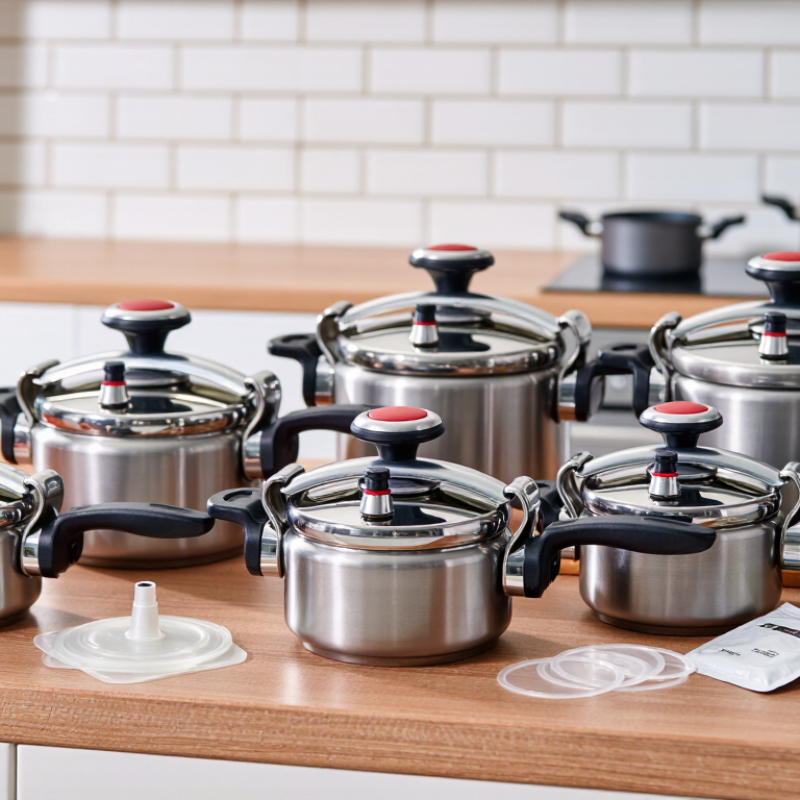
Choosing capacity starts with the meals you actually cook, not the largest pot on the shelf. The U.S. Census Bureau’s 2023 American Community Survey reports an average household size of about 2.5 people. That is a useful reference, not a sizing rule: a couple making soup for several days may need more room than a family cooking one meal. Think about portions, batch cooking, and whether the cooker must fit your storage space.
For one or two diners, a smaller cooker may handle grains, vegetables, or a modest stew. Households of three or four often find a medium-sized model more practical. Check the stated capacity in quarts or liters, then leave headroom. Many pressure-cooking instructions limit filling to about two-thirds, and less for foods that foam or expand; follow the specific cooker’s manual. The usable volume is smaller than the number on the pot.
Room matters, too. USDA Economic Research Service estimates that 30–40% of the U.S. food supply is lost or wasted, a reminder that cooking oversized batches can create avoidable leftovers. Still, this figure describes the food system, not your kitchen. I sometimes underestimate how much beans swell, so I plan a little margin rather than filling the pot to its line. Consider your usual ingredients, serving sizes, and available cupboard space before choosing.
Compare Aluminum Types, Thickness, and Cooker Construction
Aluminum pressure cookers are usually made from stamped, forged, or cast aluminum. Stamped bodies are often lighter, while forged or cast designs may feel more rigid. The exact result depends on the design, not just the manufacturing method. A hard-anodized surface can resist scratches better than untreated aluminum, but it does not make the cooker indestructible. Look closely at the rim, handles, and lid fit. Small gaps matter.
Thickness affects heat distribution and handling. A heavier body may heat more evenly and feel stable on the stove, but it also takes longer to lift when full. Thin walls can warm quickly and keep the cooker light, though they may dent more easily. I still think thickness is easy to overrate. A well-made, evenly shaped body can perform better than a thicker one with a poorly fitted lid.
Check how the base and lid are constructed. A flat, sturdy base should sit steadily on your burner; aluminum alone generally will not work on induction unless the cooker has a compatible bonded base. The locking mechanism, gasket, and pressure valve deserve equal attention. They should fit securely and be easy to inspect and clean. No part should feel loose. Check the manual for care and replacement guidance, since seals wear over time. A shiny finish can mislead. Inspect the details.
How to Choose an Aluminum Pressure Cooker
Typical thermal conductivity of common aluminum grades (approximate values)
Higher thermal conductivity can help spread heat, but cooker performance also depends on wall and base thickness, shape, and construction. Thicker metal generally adds rigidity and mass; a layered or reinforced base can improve heat distribution. Compare products by their stated materials, thickness, and pressure-safety certifications—not conductivity alone. Values are approximate and vary with alloy temper and product form.
Inspect Pressure Controls, Safety Features, and Certifications
When choosing an aluminum pressure cooker, inspect how it controls pressure before judging its capacity or finish. A clearly marked regulator or gauge makes pressure settings easier to understand. Check whether the controls are easy to read and adjust, even with the cooker on a busy stove. A loose, unclear, or awkward control deserves a closer look. The manual should explain its settings in plain language. Small details matter.
Safety features should be visible and described in the product documentation. Look for a locking lid, a pressure-release mechanism, and a gasket that can be inspected or replaced. Check that the lid closes securely and that vents are not obstructed. Certifications can offer added assurance, but requirements vary by market. Verify any certification mark against documentation from the seller or an independent testing organization. A printed logo alone is not much proof. I find this part easy to rush, and that is worth correcting.
Tips: Read the manual before buying, not just after unpacking. Confirm the cooker’s stated pressure range, compatible heat sources, and replacement-part availability. If a control or certification claim is vague, ask for written details.
Check Cooktop Compatibility, Handle Design, and Ease of Cleaning
Before buying, check that the cooker suits your cooktop. Aluminum heats quickly, but a standard aluminum base will not work on induction unless it has a magnetic layer. Read the product specifications rather than relying on appearance. On gas, keep flames beneath the base, not licking up its sides. For a glass or radiant cooktop, look for a flat bottom that sits steadily. A slight wobble matters.
Handle design affects everyday safety. A filled cooker can be surprisingly heavy, so look for secure, heat-resistant handles with enough room for a comfortable grip. Keep your hands dry when lifting it. Check that the lid lock is easy to operate without placing fingers near the steam outlet. A handle can look sturdy and still feel awkward. If possible, consider how it balances when lifted.
Cleaning is easier when the gasket and pressure valve can be removed according to the instructions. Food residue around the valve can interfere with its function, so check whether the parts are accessible and simple to rinse. Avoid rough scouring pads; they can scratch aluminum. Some discoloration may develop over time, and that can be disappointing. Follow the care directions, especially before putting any part in a dishwasher. Small details matter.
Balance Price, Durability, and Warranty Before Choosing
An aluminum pressure cooker can be a practical, lightweight choice, but the lowest price is not always the best value. Compare the cooker’s thickness, handle attachment, lid fit, and replacement-part availability. A thin body may heat quickly, yet it can dent more easily with daily use. Check that the lid closes smoothly and the handles feel secure when the pot is empty. Small details matter.
Tips: Read the warranty before buying. Check which parts it covers, how long coverage lasts, and whether normal wear is excluded. A clear warranty is more useful than a long one with vague terms.
Think about how often you will cook. For occasional meals, a modest model with solid construction may be enough. Frequent use may justify paying more for sturdier handles and parts that are easy to replace. I used to focus too much on the listed price; that missed the cost of a worn gasket or a loose handle later. Still, a higher price does not guarantee better durability. Compare the product details with the warranty, and choose a cooker that suits your routine and budget.
FAQS
Look for a clearly marked regulator or gauge. Make sure it is easy to read and adjust beside a busy stove. Small marks matter.
Check for a locking lid, a pressure-release mechanism, and an inspectable or replaceable gasket. Confirm the lid closes securely and vents are clear.
Compare the certification mark with seller documents or information from an independent testing organization. A printed logo alone is not much proof.
It should explain pressure settings, the stated pressure range, and compatible heat sources. I sometimes rush this check; that is worth correcting.
A thicker body may better resist dents during frequent use. A thinner one can heat quickly, but may show wear sooner.
With the cooker empty, see whether the handles feel secure and the lid closes smoothly. These small checks are easy to overlook.
Check its length, covered parts, and exclusions for normal wear. Clear terms matter more than a long warranty with vague wording.
No. Compare construction, replacement-part availability, and warranty details. Frequent cooks may value sturdy handles; occasional cooks may need less. Price alone can mislead.
Conclusion
Choosing an Aluminum Pressure Cooker starts with matching its capacity to your household size and cooking habits. Consider the type of aluminum, the material’s thickness, and the overall construction, since these factors can affect weight, heat distribution, and long-term durability. Look closely at the pressure controls and built-in safety features, and check that the cooker has appropriate certifications for your needs.
Before deciding, confirm that it works with your cooktop and consider whether the handles feel secure and comfortable. A design that is easy to clean can also make regular use more convenient. Finally, compare the price with the cooker’s expected durability and warranty coverage. Weighing these details together can help you choose a practical model that suits your kitchen, budget, and cooking routine.

Blog Tags: