
Featured Commercial Food Pots & Thermal Cookware
Engineered for high-volume foodservice, global commercial kitchens, and OEM private-label brands. Built to exceed FDA and LFGB international food-contact safety standards.
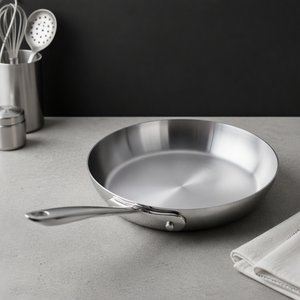
Wholesale 201 Stainless Steel Pan 3.0mm Thickness for Restaurant Use
- Material: SUS201 Reinforced Steel
- Thickness: 3.0mm Heavy-Duty Base
- Application: Commercial Catering & Kitchens
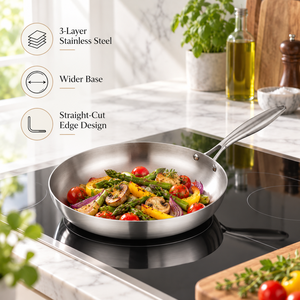
Professional 3 Ply Stainless Steel Frying Pan Wide Base Straight Cut Rim
- Structure: Tri-Ply Clad (SUS304-AL-SUS430)
- Feature: Straight Cut Dripless Rim
- Compatibility: Induction & Commercial Ranges
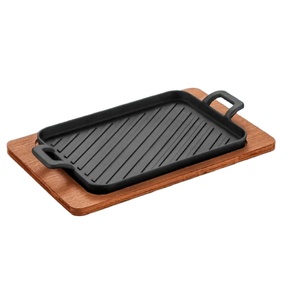
Cast Iron Rectangular Double-Handle Induction Cooker Roasted Meat Cookware
- Material: High-Density Enameled Cast Iron
- Heat Retention: Superior Thermal Mass
- Handles: Integrated Dual Ergonomic Grips
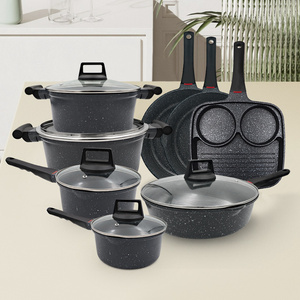
Non-Stick Die-Cast Aluminium Cookware Set With Temperature Control Handle
- Core: Die-Cast Premium Aluminium
- Coating: Multi-Layer PTFE/Ceramic Non-Stick
- Innovation: Heat-Sensing Temp Indicator
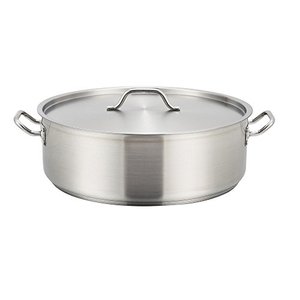
NSF Listed Korean Commercial Electric Stainless Steel Mini Cooking & Warmer Pot
- Standard: NSF / ETL Sanitation Listed
- Power: Precision Thermal Holding Element
- Use: Restaurant Soup & Food Preservation
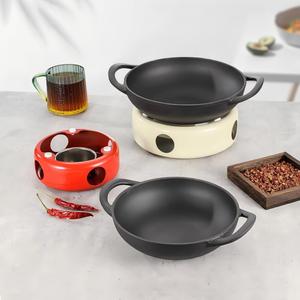
Commercial Cast-Iron Wok Stir-Fry Pan Chinese-Style Retro Dry-Pot
- Design: Dual-Handle Retro Chinese Craft
- Fuel Type: Alcohol/Gas Commercial Heating
- Durability: Anti-Warp Reinforced Iron
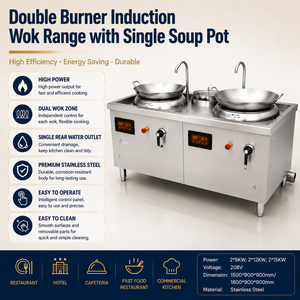
Commercial Wok Range for Restaurant Kitchens 2*12KW ETL Induction Cooker
- Power Output: Dual 12KW High-Efficiency Coil
- Certification: ETL Commercial Standard
- Structure: Stainless Steel Heavy Chassis
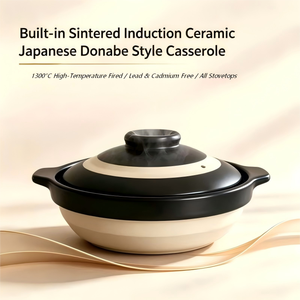
Japanese Style Handmade Ceramic Thermal Pot Induction Compatible Set
- Material: Spodumene Reinforced Clay
- Thermal Shock: Up to 600°C Heat Resistance
- Versatility: Flame & Induction Ready Base
Executive Overview: Sourcing Commercial Food Jars & Thermal Containers from China
In the rapidly evolving global market for insulated food containers, commercial thermal jars, and high-performance kitchenware, global procurement managers and brand owners face a complex landscape. Selecting an authoritative manufacturing partner in China requires looking far beyond initial unit costs. It demands a rigorous technical evaluation of double-wall vacuum insulation physics, metallurgical purity (such as food-grade SUS304 vs. medical-grade SUS316L stainless steel), regulatory safety compliance (FDA 21 CFR 175.300, European LFGB, EU 10/2011), and high-volume factory operational efficiency.
China's manufacturing ecosystem accounts for over 70% of global thermal container production. However, quality variance between tier-1 certified OEM/ODM factories and uncertified secondary suppliers can severely impact thermal insulation longevity, lid sealing integrity, and brand reputation. As a leading manufacturer with deep industrial roots, advanced automated manufacturing lines, and a robust global export logistics network, our operations deliver verifiable engineering compliance, repeatable defect rates under 0.03%, and full supply chain transparency.
Engineering Excellence: Vacuum Retention & Metallurgical Standards
The thermal performance of a premium food jar relies on precise mechanical design, automated laser welding, and rigorous getter-material activation. Below is an engineering breakdown of the structural layers engineered into our commercial thermal container series:
Austenitic Stainless Steel Liners
We utilize high-grade SUS304 (18/8) and anti-corrosive SUS316L (18/10/2) for internal liners. SUS316L contains molybdenum, providing exceptional resistance to acidic soups, salty broths, and high-temperature food items without pitting or metallic leaching.
Copper-Coated Vacuum Barriers
To stop infrared thermal radiation, the outer wall of the inner container undergoes automated micro-thin copper plating. This radiant barrier reflects infrared heat back into the food core, extending heat retention by up to 35% compared to non-plated vacuum jars.
Pressure-Relief Cap Mechanics
Hot food generates internal steam pressure that can lock lids or cause dangerous spattering upon opening. Our patented push-button equalizing valves vent internal steam pressure safely before unscrewing the lid, ensuring smooth consumer operation.
Future Procurement Trends for Global Food Jar Importers
As consumer preferences shift toward wellness, sustainability, and hybrid working lifestyles, global procurement directors must align their product roadmaps with five critical technology trends dominating the 2025–2030 commercial landscape:
1. PFAS-Free & Non-Toxic Inner Linings
Global environmental bans on Forever Chemicals (PFAS, PFOA, PFOS) are accelerating. Modern food jar buyers prioritize electropolished seamless stainless steel interiors or inorganic ceramic coatings over organic non-stick sprays, ensuring 100% toxic-free meal contact.
2. Smart Digital Temperature Indicators
Integration of ultra-low power LED touch screens on lid surfaces allows users to monitor internal liquid and food temperatures in real time without opening the seal, preventing accidental scalding while retaining thermal energy.
3. Modular Ergonomic & Utensil Storage
Buyers demand integrated solutions. Current top-selling B2B designs incorporate collapsible 304 stainless steel folding spoons nestled inside lid compartments, alongside modular dual-dish stacking trays for meal separation.
4. Lightweight Spin-Formed Steel Shells
Advanced CNC spin-forming allows manufacturing walls to be reduced from 0.5mm down to 0.3mm without sacrificing structural integrity, resulting in a 25% lighter overall product weight—a crucial factor for outdoor and urban commuter lines.
5. Eco-Powder Coat & Matte Aesthetics
Traditional smooth paints are being replaced by high-durability, anti-scratch powder coatings. These eco-friendly coatings provide superior tactile grip, withstand 50+ commercial dishwasher cycles, and significantly reduce VOC emissions during manufacturing.
6. ESG Supply Chain Accountability
Tier-1 retail brands require suppliers to pass rigorous BSCI, SEDEX, and ISO14001 environmental audits. Full traceability of raw steel sources and recycled content ratios is becoming mandatory across North American and EU customs entry points.
B2B Manufacturing Comparison: Tier-1 Factory vs. Trading Vendors
Evaluating potential food jar manufacturers requires clear benchmarks. The matrix below contrasts factory-direct manufacturing capabilities with typical unverified trading intermediary offerings:
| Evaluation Parameter | Our Direct Manufacturing Standards | Standard Trading Intermediary |
|---|---|---|
| Steel Grade Verification | ✓ Spectrometer Batch-Tested SUS304 / SUS316L | Unverified Grade 201 or Mixed Scrap Steel |
| Vacuum Level Rating | ✓ $10^{-3}\text{ Pa}$ Vacuum Chamber Seal | Inconsistent Passive Air Insulation |
| International Certifications | ✓ FDA 21 CFR, LFGB, NSF, BSCI, ISO9001 | Self-Declared Unverified Lab Certificates |
| Thermal Retention Guarantee | ✓ 68°C+ at 12 Hrs / Cold < 9°C at 24 Hrs | Under 6 Hours Heat Retention |
| OEM Customization Scope | ✓ 3D Prototyping, Custom Molds, Pantones, Laser Engraving | Basic Silk-Screen Logo Printing Only |
| Quality Defect Rate (AQL) | ✓ AQL 0.65 Major / 1.0 Minor (Defect < 0.03%) | AQL 2.5 / 4.0 Standard (Defect > 2.5%) |
Enterprise Strength: 34+ Years of Manufacturing Leadership
Established in 1990 and located within the BSCIC Industrial Estate in Kushtia, our industrial manufacturing complex spans over 150,000 square meters of state-of-the-art production facilities. Operating as Bangladesh's No. 1 recognized brand and a top-tier global export partner, we combine industrial automation with precision craftsmanship.
Automated Production Lines
Our facility operates 12 fully automated robotic deep-drawing presses, continuous atmosphere vacuum annealing furnaces, and ultrasonic cleaning systems, ensuring dimensional precision across millions of units annually.
Comprehensive Product Ecosystem
With over 500 active product lines—including non-stick die-cast aluminum cookware, tri-ply stainless steel pots, pressure cookers, electric rice cookers, and thermal food jars—we provide one-stop sourcing efficiency for global importers.
Global Distribution Reach
Trusted by more than 30,000 retail channels and international distributors across Asia, Europe, North America, and the Middle East, our logistics department manages seamless FOB, CIF, and DDP export operations.
Frequently Asked Questions (FAQ) for Food Jar Buyers
Addressing critical technical, quality control, custom branding, and international freight questions for professional procurement officers.
Partner with China's Premier Food Jar & Cookware Manufacturer
Request a custom OEM/ODM quotation, engineering catalog, or factory audit report today. Our B2B engineering team responds within 12 hours.