
Featured Commercial & Professional Cookware Catalog
Explore our certified commercial-grade kitchenware selection. Engineered with precision metallurgical alloys, high-impact cladding, and certified multi-stage safety relief valve systems, each unit is manufactured to comply with strict global safety standards including EN 12778, UL 136, NSF, and ETL specifications.
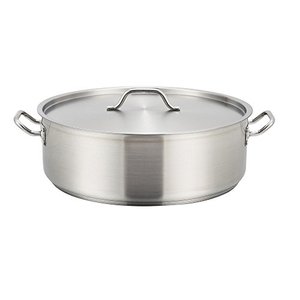
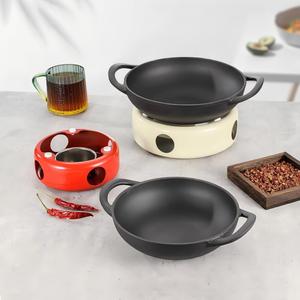
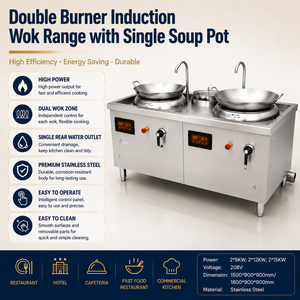
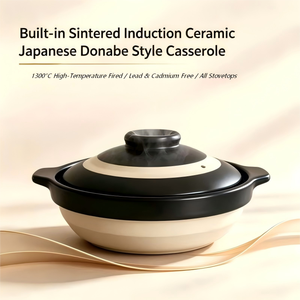
B2B Technical Whitepaper: Engineering Standard & Manufacturing Excellence
Selecting an industrial pressure cooker partner requires rigorous evaluation of metallurgical composition, structural pressure vessel integrity, safety valve redundancy, and heat transfer efficiency. As China’s premier pressure cooker manufacturer and global exporter, our operational ecosystem combines state-of-the-art automation with strict metallurgical quality assurance.
Advanced Tri-Ply Cladding
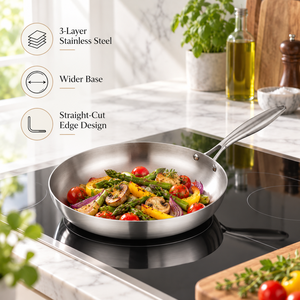
Engineered with AISI 304 food-grade inner stainless steel, a 1050 pure aluminum thermal core, and an AISI 430 magnetic outer layer compatible with high-wattage commercial induction ranges.
Triple-Stage Safety Systems
Equipped with dual weight-activated pressure limiters, safety relief silicon gaskets, and mechanical self-locking pins that prevent opening under residual pressure (>4 kPa).
Precision OEM/ODM Customization
Full support for private labeling, customized laser etching, variable pot depth engineering, custom handle ergonomics, and tailor-made retail color box packaging.
Metallurgical Chemistry & Structural Pressure Dynamics
In high-density commercial catering and institutional food production, pressure cookers endure repeated thermal cycling from 20°C to over 125°C at working pressures ranging between 60 kPa and 110 kPa. Choosing the appropriate alloy standard directly impacts vessel longevity and operational safety:
- Food-Grade Stainless Steel (AISI 304 / SUS304): Contains 18% Chromium and 8% Nickel. Highly resistant to organic acid corrosion, spice oxidation, and alkaline washing chemicals. Essential for sanitary commercial cooking applications.
- Commercial Grade 201 Stainless Steel: Utilizes Manganese-Nickel alloys to balance cost and structural tensile strength. Ideal for budget-conscious restaurant equipment where quick thermal response and structural rigidity are required at competitive price points.
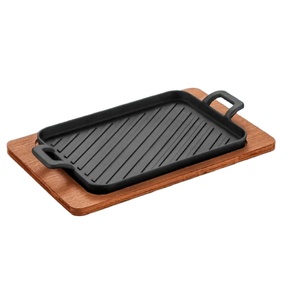
- Heavy-Gauge Cast Iron & Die-Cast Aluminum: Die-cast aluminum cookware features superior volumetric density and zero porosity. When coupled with hard-anodized surface treatments, it delivers non-stick properties and lightweight ergonomics for fast-paced commercial kitchens.
Future Procurement & Manufacturing Trends in Commercial Cookware
The global commercial cookware market is undergoing a rapid evolution driven by energy conservation policies, strict PFAS/PFOA chemical bans, and the digitization of commercial kitchen equipment. Enterprise procurement teams must align their supply chain strategies with these four key macro trends:
1. High-Efficiency Induction Compatibility
With commercial kitchens transitioning from LPG gas to high-power induction ranges (12KW–24KW), pressure cookers and woks are now designed with bonded magnetic stainless steel bases (AISI 430) for maximum thermal flux transfer.
2. Eco-Friendly Ceramic Non-Stick Coatings
Global regulatory bodies (FDA, EFSA, REACH) are phasing out traditional PTFE coatings containing trace PFOA/PFAS. Next-generation cookware utilizes sol-gel ceramic non-stick linings derived from natural silica, offering heat tolerance up to 450°C without toxic fumes.
3. Integrated Thermal Monitoring
Smart pressure vessels and heavy-duty pots now incorporate real-time temperature sensing handles and silicone thermo-chromic indicator rings, providing visual heat cues for kitchen staff to optimize safety and energy use.
B2B Material & Specification Comparison Matrix
The matrix below outlines key technical parameters across our primary commercial cookware categories to assist global procurement officers in matching material specifications with specific operational requirements:
| Product Category | Primary Material | Thermal Conductivity | Induction Compatible | Working Pressure / Temp | Recommended Use |
|---|---|---|---|---|---|
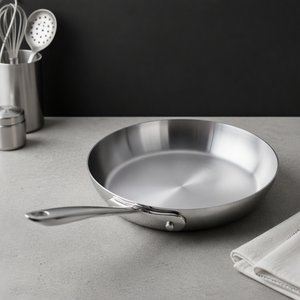
| Commercial Stainless Pan | AISI 201 / 304 Stainless (3.0mm) | 16.3 W/m·K | Yes (Impact-Bonded Bottom) | Up to 300°C Direct Heat | High-Volume Restaurants, Sautéing |
| 3-Ply Clad Cookware | SS304 + AL1050 + SS430 | 160 W/m·K (Aluminum Core) | Yes (Full-Clad Base) | Up to 400°C Direct Heat | Commercial Kitchens, Chef Lines |
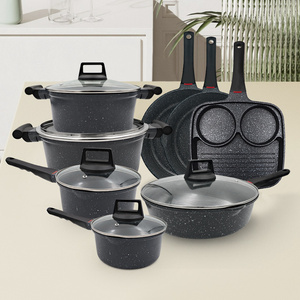
| Die-Cast Aluminum Set | ADC12 Aluminum Alloy | 96 W/m·K | Yes (Disc Base Option) | Up to 260°C (Non-Stick) | Institutional Catering, Non-Stick Cooking |
| Heavy Commercial Wok Range | Cast Iron / Heavy Carbon Steel | 52 W/m·K | Yes (2*12KW ETL System) | Up to 500°C High-Heat Stir Fry | Asian Culinary Establishments, Hotels |
| High-Temperature Ceramic Set | Spodumene Reinforced Clay | Low Thermal Expansion | Yes (Special Plate Adapter) | Thermal Shock > 500°C | Slow Stewing, Tabletop Display Pots |
Why Partner With Us: Our Manufacturing Ecosystem
With over three decades of dedicated experience in metal forming and pressure vessel engineering, our enterprise operates comprehensive production facilities designed for high volume, consistent quality, and strict international compliance.
Rigorous Quality Assurance
Every single batch of pressure cookers undergoes hydrostatic testing at 1.5x working pressure, along with air-tightness tests, drop tests, and chemical salt-spray anti-corrosion testing.
End-to-End Export Logistics
We manage complete export documentation including Certificate of Origin (Form E, Form F), CE certificates, RoHS compliance reports, and full container load (FCL) packing optimization.
Frequently Asked Questions for B2B Procurement
Ready to Scale Your Commercial Cookware Supply Chain?
Connect with our senior engineering and export sales specialists today for custom OEM quotes, product catalogs, and detailed factory audit reports.