
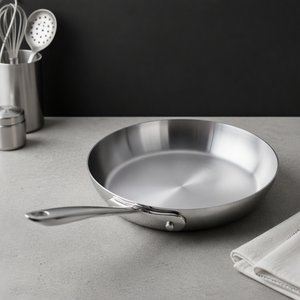
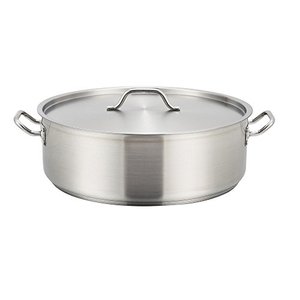
Wholesale 201 Stainless Steel Frying Pan (3.0mm Heavy Duty Thickness)
Core Material: 201 Premium Steel
Thickness: 3.0mm Gauge
Application: Restaurant / Commercial
High-performance ceramic frypans, tri-ply stainless steel cookware, and heavy-duty commercial kitchen solutions manufactured under ISO9001 quality management systems.
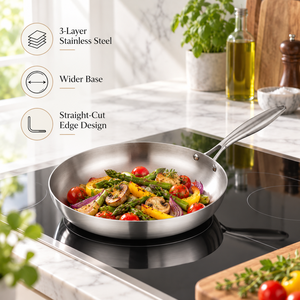
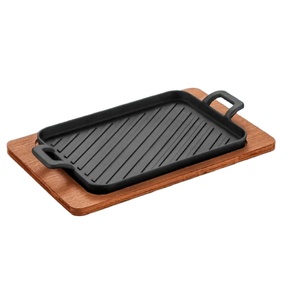
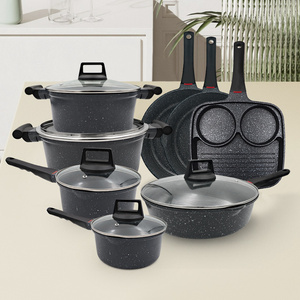
An authoritative technical analysis for global brand directors, OEM importers, and retail category managers navigating supply chains, coating technologies, and compliance frameworks.
The global cookware market is undergoing a seismic paradigm shift. Regulatory pressures in Europe (under REACH and upcoming PFAS restrictions) and North America (State-level legislation like California AB 1200 and Colorado HB 1345) are accelerating the phase-out of traditional Perfluoroalkyl and Polyfluoroalkyl Substances (PFAS), including PTFE (Teflon). For international procurement managers, securing a reliable China Wholesale Ceramic Frypan Manufacturer & Supplier is no longer just a cost-efficiency decision—it is a critical risk mitigation strategy.
Ceramic non-stick coatings utilize inorganic Sol-Gel nanotechnology. Unlike organic PTFE polymers that begin to degrade at 260°C (500°F) and emit toxic pyrolysis fumes (such as polymer fume fever precursors) at 350°C, Sol-Gel ceramic coatings are produced from a silica (SiO2) matrix derived from natural sand. This inorganic matrix can withstand extreme operational temperatures up to 450°C (842°F) without structural breakdown, blister formation, or hazardous off-gassing.
To evaluate Total Cost of Ownership (TCO) and consumer satisfaction metrics, our engineering team has benchmarked key commercial cookware substrates:
| Performance Indicator | 4th Gen Sol-Gel Ceramic | Traditional PTFE Non-Stick | Tri-Ply Stainless Steel | Pre-Seasoned Cast Iron |
|---|---|---|---|---|
| Thermal Resistance Limit | 450°C (842°F) | 260°C (500°F) | 600°C+ (1100°F+) | 500°C+ (930°F+) |
| PFAS / PFOA / Heavy Metal Free | 100% Certified Free | Legacy Risk / Regulatory Bans | 100% Certified Free | 100% Certified Free |
| Abrasion Resistance (Cycles) | > 25,000 (BS 7069) | 10,000 - 40,000 | Indestructible | High (Self-Healing) |
| Thermal Conductivity (W/m·K) | 160 - 200 (Die-Cast Core) | 160 - 180 (Forged Core) | 15 - 30 (Poor Core) | 52 (Moderate) |
| Dishwasher Chemical Resistance | High (Neutral pH Detergent) | Moderate to Low | Maximum | Hand Wash Only |
| B2B Unit Production Cost Index | Optimal (Moderate-High Margin) | Low (Declining Market) | High (Premium Segment) | Moderate (Freight Sensitive) |
A non-stick ceramic pan's longevity depends heavily on the thermal dynamics of its underlying metal substrate. As a premier manufacturer with 34+ years of industrial metalworking expertise, we engineer three distinct structural bases designed to meet specific price points and commercial stress demands:
Die-casting involves injecting molten aluminum under high pressure (up to 800 tons of clamping force) into precision steel molds. This process creates a dense, non-porous structure with variable wall thickness—typically engineered with a 4.5mm to 6.0mm heavy gauge rim and base, fading to a 2.5mm sidewall. This anatomical weight distribution prevents thermal warping under rapid quenching (e.g., placing a hot pan under cold water) while maintaining optimal handling weight.
Cold-forged cookware utilizes heavy-gauge aluminum sheets pressed into shape under thousands of tons of hydraulic pressure. 3003-series aluminum provides superior ductility and excellent heat dispersion. Forged ceramic pans offer exceptional cost-per-unit ratios, making them the primary candidate for high-volume retail chains, private label supermarket promotions, and e-commerce starter sets.
Targeting the ultra-premium HORECA (Hotel, Restaurant, Catering) segment, tri-ply ceramic pans combine the non-reactive hygienic properties of food-grade 18/10 (SUS304) stainless steel with an internal aluminum heat-conducting core, exteriorized by magnetic SUS430 stainless steel. When coated with our 4th-generation hybrid ceramic matrix, these pans offer unmatched durability in high-intensity commercial kitchens.
Early iterations of ceramic cookware (1st and 2nd generation) suffered from micro-porosity and rapid non-stick degradation after 30 to 50 cooking cycles. Our factory has pioneered 4th Generation Hybrid Silicon-Polymer Ceramic Matrices which resolve these historic limitations through three key innovations:
Full-bound plasma-sprayed or impact-bonded stainless steel mesh bottom ensures 98.5% energy transfer efficiency across all induction hobs and gas ranges.
Fully compliant with FDA 21 CFR 175.300, EU No 1935/2004, German LFGB, and RoHS standards. Guaranteed 0% Lead, Cadmium, PFOA, PFOS, or GenX.
Selection of ergonomic Stay-Cool Bakelite, Soft-Touch silicone, cast stainless steel riveted handles, or detachable wooden handles for space-saving packaging.
To assist enterprise buyers in maintaining market leadership, our business intelligence unit has synthesized key technical and commercial trends shaping the cookware industry:
The European Chemicals Agency (ECHA) universal PFAS restriction proposal is moving closer to enforcement. Major retail conglomerates in North America and Western Europe have set strict deadlines to purge all fluorinated coatings from their store shelves by 2026. Retail buyers must transition their product lines to Sol-Gel ceramic suppliers to avoid supply chain disruptions and inventory write-downs.
Modern consumers treat cookware as an extension of kitchen interior design. Matte pastel tones (cream beige, sage green, terracotta, warm grey) and granite-speckled ceramic finishes are rapidly outstripping classic black non-stick pans. Our factory utilizes high-precision automated color-matching technology to execute custom Pantone-matched exterior heat-resistant lacquers.
With global container shipping rates fluctuating and warehouse storage costs climbing, space efficiency is a paramount supply chain metric. Detachable handle ceramic cookware systems allow pans to nest tightly within one another, reducing master carton cubic volume by up to 55%. This dramatically lowers per-unit ocean freight costs and maximizes retail shelf density.
Originally established in 1990, our manufacturing infrastructure (operating under the global banner of Kiam Metal Industries Limited / Edel Kitchens) represents one of Asia's most integrated cookware production ecosystems. Our enterprise footprint includes:
Detailed technical answers addressing common procurement inquiries, quality verification protocols, and custom manufacturing terms.
Our standard MOQ for custom color ceramic coatings and branded packaging is 1,000 units per size/color for die-cast series, and 2,000 units for forged aluminum series. For standard catalog models in existing factory runs, lower MOQs can be negotiated.
Every batch of ceramic coating material undergoes ICP-OES spectroscopy testing. We provide full third-party test reports (SGS, TUV, Intertek) confirming zero extraction of heavy metals (Lead, Cadmium, Arsenic) and total absence of fluorinated compounds (PFAS, PFOA, PFOS, GenX) under FDA 21 CFR 175.300 and EU 1935/2004 regulations.
Under standardized LGA / BS 7069 mechanical abrasion testing using Scotch-Brite scouring pads under 1.5 kg of downward force, our 4th-generation ceramic coating retains excellent non-stick release properties beyond 25,000 passes, significantly outperforming 1st-generation ceramic formulas.
Yes. We offer two induction base options: (1) Impact-bonded magnetic stainless steel induction discs (430 grade) pressed under 1,200 tons of pressure, or (2) Full-body spray-coated magnetic bottom technology for seamless edge-to-edge induction heating.
We supply fully customized 4-color offset printed color boxes, sleeve wraps, mail-order drop-test pass packaging (ISTA-3A standard with EPE foam buffers), and retail-ready FSDU (Free Standing Display Unit) floor stands.
For customized OEM product designs, initial 3D rapid prototyping takes 3–5 days. Tooling and mold fabrication require 18–25 days. Once pre-production samples are approved, mass production delivery lead time is typically 30 to 40 days upon L/C or deposit confirmation.
We execute a strict 4-stage QA protocol: Incoming Raw Material Inspection (AQL 1.0), In-Line Coating Thickness & Curing Temperature Monitoring, Post-Assembly Thermal Shock & Cross-Hatch Adhesion Testing (ASTM D3359), and Final Pre-Shipment Inspection (AQL 2.5).
We support all standard Incoterms 2020, including FOB Ningbo/Shenzhen/Chittagong, CFR, CIF, and full door-to-door DDP arrangements (including customs clearance and import duty handling for US, EU, and UK buyers).
Request our comprehensive 2025 Product Catalog, full factory inspection reports, and factory-direct FOB price matrices tailored to your order volume.