2025-2030 B2B OEM/ODM Sourcing Whitepaper

China Wholesale Kitchen Tools Factory & Suppliers

Global Commercial Cookware Engineering, Material Science Analysis, Procurement Trends & Direct Factory Supply Chain Guide

Global Kitchenware & Commercial Culinary Equipment Manufacturing Benchmark

An authoritative analysis on raw material integrity, thermo-dynamics, non-stick polymer evolution, and contract manufacturing strategies for enterprise buyers.

The global commercial kitchen tools and cookware sector is undergoing a profound structural shift driven by modern induction chemistry, stringent international food-contact safety standards (FDA, LFGB, NSF, ETL), and shifting global B2B procurement corridors. As hospitality chains, commercial catering operators, mass-market importers, and private label brands re-evaluate their supply chains, sourcing directly from verified tier-1 manufacturing hubs in China and integrated South Asian production facilities has become a critical strategic lever. Commercial cookware is no longer evaluated merely on surface aesthetic or unit price; modern procurement managers assess structural tensile strength, thermal diffusions, alloy purity, coating mechanical adhesion (abrasion resistance cycles), and lifecycle total cost of ownership (TCO).

This comprehensive industry whitepaper examines the technical specifications, manufacturing paradigms, material science developments, and global procurement trends defining high-performance kitchen tools. Backed by over three decades of precision metal fabrication experience, 500+ active automated tooling lines, a workforce exceeding 3,500 skilled technicians, and an established distribution footprint spanning 30,000+ retail and commercial B2B partners worldwide, this report serves as the definitive sourcing manual for professional buyers seeking reliable OEM/ODM factory partnerships.

Information Gain Highlight: Commercial kitchenware durability relies heavily on alloy density and bonding press tonnage. Modern 3-ply clad stainless steel (304 Stainless Steel + Aluminum Core + 430 Magnetic Stainless Steel) reduces energy consumption by up to 32% on commercial 12KW induction ranges compared to traditional single-ply pans while eliminating thermal hot spots that cause localized food scorching.

Featured Commercial & Wholesale Cookware Product Lines

Explore our top-performing B2B cookware solutions engineered for heavy-duty restaurant, hotel, and retail applications.

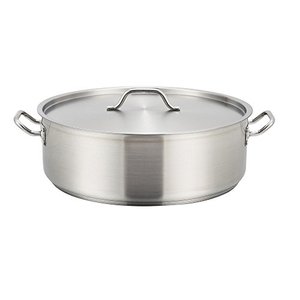
Wholesale 201 Stainless Steel Pan 3.0mm Thickness

Wholesale 201 Stainless Steel Pan Stainless Pans Steel Frying Pan 3.0mm Thickness for Restaurant Use

Material: 201 Commercial Grade Stainless Steel
Thickness: 3.0mm Heavy-Duty Heavy Gauge Base
Application: High-Heat Commercial Fryers & Gas
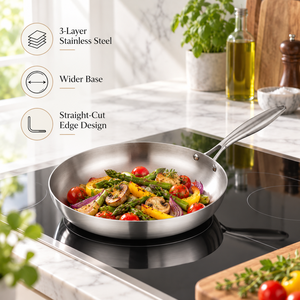
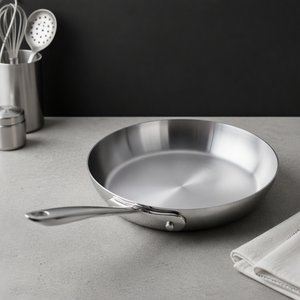
Professional 3 Ply Stainless Steel Frying Pan

Professional 3 Ply Stainless Steel Frying Pan Wide Base Straight Cut Rim Handle Height for Commercial Kitchen Cooking

Structure: Tri-Ply Clad Metal (304/AL/430)
Design: Straight-Cut Spill-Resistant Rim
Ergonomics: Elevated Cool-Touch Riveted Handle
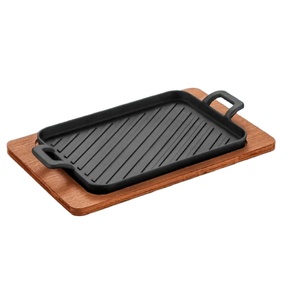
Cast Iron Rectangular Double-Handle Cookware

Cast Iron Rectangular Double-Handle Induction Cooker Roasted Meat Steak Commercial Barbecue Cookware Cast Iron Cooking

Material: Pre-Seasoned High-Density Cast Iron
Heat Retention: Superior Thermal Mass Retention
Compatibility: Induction, Gas, Open Flame Grills
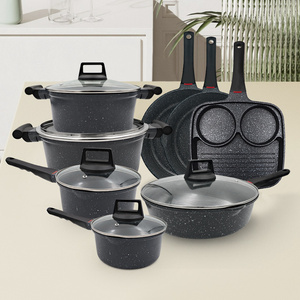
SANLANG Wholesale Non Stick Die Cast Aluminium Cookware Set

SANLANG Wholesale Non Stick Pan Induction Cookware Sets Pots Die Cast Aluminium Cookware Set With Temperature Control Handle

Fabrication: Precision Die-Cast Aluminum Body
Coating: Multi-Layer Non-Stick PTFE/Ceramic
Smart Tech: Heat-Sensitive Color Control Handle
NSF Listed Korean Commercial Electric Mini Cooking Pot

NSF Listed Korean Commercial Electric Stainless Steel Mini Cooking Pot for Restaurant

Certification: NSF Sanitation Listed & CE Certified
Voltage: Commercial Dual Voltage Heating element
Target Market: Hotpot Restaurants & Buffet Tables
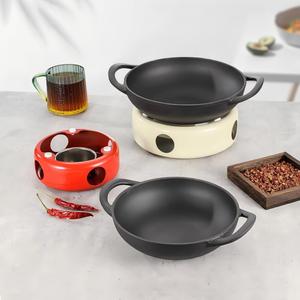
Commercial Cast-iron Wok Stir-fry Pan Chinese Style Retro

Commercial Cast-iron Wok Stir-fry Pan Two Handles Dry-pot Cookware Restaurant-specific Pot Alcohol-fueled Chinese-style Retro

Style: Traditional Chinese Retro Dry-Pot Wok
Handles: Dual Solid Cast Iron Side Ear Handles
Fuel Compatibility: Alcohol Burner, Gas, Charcoal
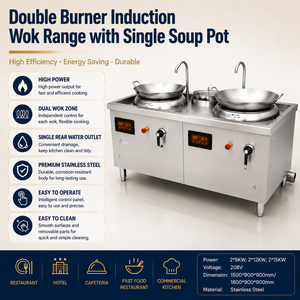
Commercial Wok Range 2x12KW ETL Induction Cooker

Commercial Wok Range for Restaurant Kitchens 2*12KW ETL Induction Cooker with Single Soup Pot

Rating: ETL Sanitation & Electrical Certified
Power Output: Dual 12KW Commercial Induction Coil
Construction: Heavy 304 Stainless Steel Chassis
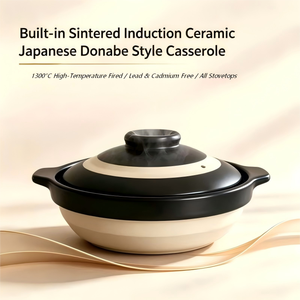
Japanese Style Handmade Ceramic Pot Induction Compatible

Japanese Style Handmade Ceramic Ceramic Pot Induction Commercial-Grade High-Temperature Resistant Durable Multiple Cookware Set

Material: High-Thermal Spodumene Ceramic
Thermal Resistance: -20°C to 500°C Shock Resistant
Features: Thermal Magnetic Base for Induction
34+
Years Manufacturing Excellence
3,500+
Skilled Factory Personnel
500+
Active Tooling & Product Lines
30,000+
Global B2B Retail Partners
100%
AQL 2.5 Inspection Pass Rate

Future Procurement Trends in Commercial Kitchen Equipment

Key technology vectors shaping global procurement decisions for commercial kitchens and consumer cooklines.

1. Commercial Induction Optimization

As global environmental regulations restrict commercial gas hookups in major metropolitan regions across North America and Western Europe, commercial kitchens are transitioning to high-efficiency induction cooking systems. B2B cookware procurement is heavily prioritizing multi-layer clad metals featuring 430 grade ferritic stainless steel bases that exhibit optimal magnetic permeability and thermal response under high-kilowatt commercial induction fields (such as 12KW to 25KW wok ranges).

2. Next-Gen PFAS-Free Eco Ceramics

Regulatory mandates including the EU REACH updates and US state-level PFAS bans are accelerating the retirement of traditional PTFE non-stick coatings. Professional buyers are opting for advanced sol-gel ceramic non-stick surface coatings infused with silicon dioxide (SiO2) and titanium micro-particles. These coatings deliver scratch resistance exceeding 50,000 cycles under ASTM D3359 cross-hatch testing while maintaining 100% non-toxic release properties up to 450°C.

3. Heavy Die-Cast vs. Stamped Aluminum

Purchasing directors are shifting away from cheap sheet-stamped cookware toward high-pressure die-cast aluminum. Die-casting creates a dense, stress-free molecular structure with variable wall thicknesses—thicker at the thermal base (6.0mm–8.0mm) to prevent thermal warping under thermal shock, and tapered at the sidewalls (3.5mm–4.5mm) to reduce overall weight for ergonomic chef handling.

Material Engineering & Metallurgy Comparison Matrix

A comparative evaluation of commercial cookware substrates to assist sourcing engineers in matching materials to specific culinary operating environments.

Substrate Material Thermal Conductivity Induction Compatibility Durability & Tensile Primary Commercial Use Case Food Safety Certification
Tri-Ply Clad (304-AL-430) High (Uniform Core) 100% Compatible Extreme (>600 MPa) Sauteing, Heavy Reduction, Commercial Sauces NSF Listed / FDA Compliant
201 Stainless Steel (3.0mm) Moderate Requires Impact Base High Structural Rigidity High-Volume Stockpots, Deep Fry Pans LFGB / GB4806 Approved
High-Pressure Die-Cast Aluminum Very High Fitted Steel Disc Base High (Anti-Warp Base) Non-Stick Omelet Pans, Commercial Casseroles PFAS/PFOA Free Ceramic
Pre-Seasoned Cast Iron Moderate (High Mass) 100% Compatible Virtually Indestructible Searing Steaks, Sizzling Plates, Oven Roasting GRAS / Natural Iron Safe
High-Temp Ceramic (Spodumene) Low (High Retention) Special Thermal Disc Fragile to Mechanical Shock Japanese Donabe, Slow Stewing, Table Serving Lead/Cadmium Free Tested

Industry Development Trends: Automation & Quality Control

How modern Smart Factories are revolutionizing cookware yield, tolerances, and OEM customization speed.

The commercial kitchenware manufacturing landscape in China and modern industrial parks has evolved from labor-intensive assembly lines to highly automated, industry 4.0 smart factory ecosystems. Advanced OEMs utilize robotic laser welding for handle attachment, eliminating interior pan rivets where bacteria typically collect in commercial food service operations. Furthermore, multi-axis CNC spinning machines ensure precision rim thickness tolerances within ±0.05mm, guaranteeing a perfect vapor seal when paired with commercial stainless steel or tempered glass lids.

Automatic spray coating tunnels operating in ISO Class 7 cleanroom environments ensure consistent ceramic and PTFE film thickness (controlled between 35 to 45 microns). This eliminates micro-pinhole defects that lead to premature coating delamination when subjected to commercial dishwashing detergents and high-salinity cooking environments.

Global Export Logistics

Direct container loading, custom palletization, drop-test certified retail color boxes, and seamless export documentation for FOB, CIF, or DDP delivery to global ports.

Rapid Tooling & Prototyping

In-house mold engineering department capable of delivering 3D CAD rapid prototypes within 7 days and completed mass production die tooling within 25 days.

Rigorous QA Standards

Every production lot undergoes thermal shock testing (-20°C to 300°C), salt spray corrosion chamber testing (72 hours), and dishwasher resistance testing.

Enterprise Manufacturing Advantages & Supply Chain Infrastructure

Leveraging scale, vertical integration, and deep engineering heritage to power global kitchenware brands.

Founded with a vision of culinary engineering excellence, our enterprise group (including Kiam Metal Industries and Edel Kitchens manufacturing divisions) operates as a leading B2B kitchenware conglomerate. With a 34-year operational history since 1990, our state-of-the-art manufacturing zones feature high-tonnage hydraulic drawing presses (up to 2,500 tons), automated die-casting cells, non-stick roller/spray coating lines, and dedicated assembly divisions for commercial electric appliances, gas stoves, pressure cookers, and cookware sets.

Our integrated manufacturing footprint allows B2B clients to streamline their vendor base. Instead of managing multiple disparate vendors for stainless steel cookware, cast iron equipment, aluminum die-casting, and commercial induction range units, buyers can source complete, cohesive product lines under one unified quality management framework certified to ISO 9001:2015, ISO 14001:2015, and BSCI social compliance audits.

Frequently Asked Questions (B2B Procurement FAQs)

Detailed technical answers to common queries from global sourcing directors, brand managers, and commercial buyers.

Q1: What is the typical Minimum Order Quantity (MOQ) for custom OEM cookware orders?
Our standard Minimum Order Quantity (MOQ) for custom OEM production runs is generally 1,000 to 2,000 units per product SKU for standard stainless steel and die-cast aluminum lines. For custom color executions (pantone matched ceramic coatings) or specialized laser-etched branding, MOQ is 1,500 units. However, for established distributors ordering mixed full-container loads (FCL 20GP/40HQ), we accommodate lower per-SKU quantities across our catalog.
Q2: Are your non-stick coatings compliant with current US FDA, EU REACH, and LFGB food safety regulations?
Yes, 100% of our non-stick coatings (both multi-layer PTFE and mineral-reinforced ceramic systems) are formulation-certified to be completely free of PFOA, PFAS, Lead, Cadmium, and GenX compounds. We provide certified laboratory test reports from accredited third-party testing agencies (SGS, TUV, Intertek) with every mass production batch destined for North American, European, or Australian markets.
Q3: What is the difference in thermal performance between 201 and 304 stainless steel in commercial kitchens?
304 Grade Stainless Steel contains higher chromium (18%) and nickel (8%) content, offering maximum resistance to chemical pitting and organic acid corrosion (ideal for tomato sauces, high-salinity boiling, and aggressive commercial dishwashing). 201 Grade Stainless Steel offers higher yield strength and cost efficiency for dry heating or medium-duty commercial applications. When combined with a 3.0mm impact-bonded aluminum base, both grades deliver uniform thermal dispersion.
Q4: Can you manufacture commercial equipment with specialized electrical certifications such as ETL, CE, or NSF?
Absolutely. Our commercial electric product lines—including our 2*12KW Commercial Induction Wok Ranges and Electric Mini Cooking Pots—are designed specifically to meet ETL Electrical, ETL Sanitation (conforming to NSF/ANSI Standard 4), CE, and CB electrical standards. We routinely assist OEM brand partners with regulatory submittals and factory inspection audits.
Q5: What are your factory lead times for tooling development and bulk order shipping?
For standard catalog items with custom branding and packaging, bulk production lead time is 25 to 35 days post-sample approval and deposit receipt. For completely custom ODM product designs requiring new die-cast or stamping tooling, mold engineering requires 20 to 30 days, followed by 7 days of pre-production sample evaluation before full mass production commences.
Q6: How do you handle Quality Assurance (QA) and pre-shipment inspections?
We enforce strict AQL Level II (Critical 0, Major 1.5, Minor 4.0) sampling protocols. Quality inspection covers raw material alloy spectrographic analysis, coating dry-film thickness measurement (microns), coating adhesion cross-hatch testing, handle load-bearing torque testing, and 100% high-voltage dielectric withstand testing on electrical appliances. Buyers are welcome to appoint third-party inspection firms (e.g., SGS, V-Trust) prior to balance payment release.
Q7: Do your induction-compatible cookware items work on all commercial induction hobs?
Yes. Our cookware features high-permeability AISI 430 stainless steel bottom plates attached via high-tonnage thermal friction bonding or full-body tri-ply clad metal construction. This guarantees flawless performance across both standard 3.5KW countertop units and heavy-duty 12KW+ commercial concave wok ranges without causing induction coil fault codes or base warping.
Q8: What custom branding and private label packaging options are available?
We offer comprehensive OEM private label customization: laser-engraved bottom logos, stamped handle branding, custom cast-in relief logos, customized Pantone color non-stick coatings, 5-ply corrugated mail-order gift boxes, color sleeves, barcode/UPC sticker application, and ocean-freight pallet wrapping compliant with ISPM 15 wood packaging standards.

Request Complete 2025 B2B Product Catalog & Wholesale Price List

Partner directly with China's leading commercial kitchen tools manufacturer. Connect with our senior engineering and export sales teams to discuss custom tooling, bulk pricing discounts, and private-label contract manufacturing options.