
Featured Commercial & Wholesale Product Lines
Engineered for high-volume commercial HORECA environments, institutional food services, and global retail brands. Fully customizable under strict ISO9001 quality compliance.
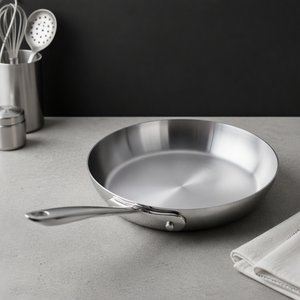
Wholesale 201 Stainless Steel Pan Steel Frying Pan 3.0mm Thickness for Restaurant Use
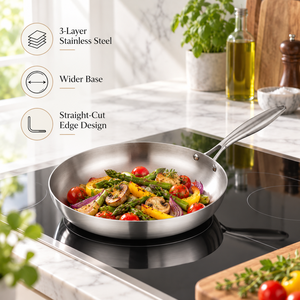
Professional 3-Ply Stainless Steel Frying Pan Wide Base Straight Cut Rim for Commercial Kitchens
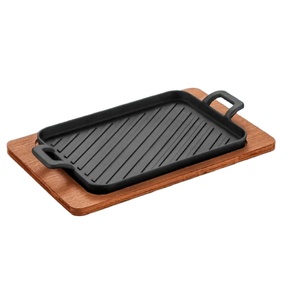
Cast Iron Rectangular Double-Handle Induction Cooker Steak Barbecue Cookware
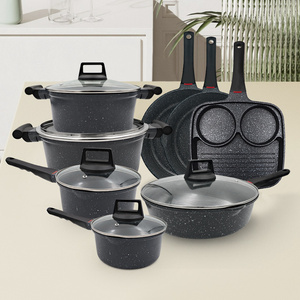
Wholesale Non-Stick Induction Die-Cast Aluminium Cookware Set with Thermo-Control Handle
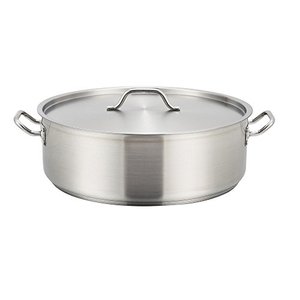
NSF Listed Korean Commercial Electric Stainless Steel Mini Cooking Pot for Restaurants
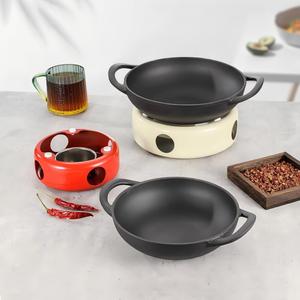
Commercial Cast-Iron Wok Stir-Fry Pan Two Handles Alcohol-Fueled Retro Dry-Pot
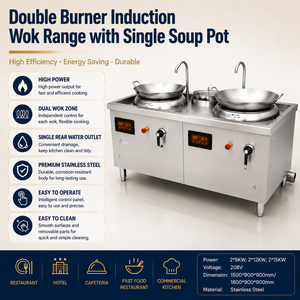
Commercial Wok Range for Restaurants 2*12KW ETL Induction Cooker with Soup Pot
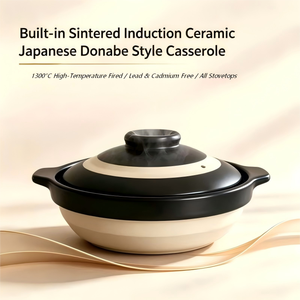
Japanese Style Handmade Ceramic Cookware Set High-Temperature Resistant Induction Pot
Industrial Scale & Enterprise OEM Capability
Leveraging decades of metallurgical mastery, automated die-casting infrastructure, and global distribution logistics to power top-tier B2B kitchenware brands worldwide.
End-to-End Manufacturing Integration & Engineering Excellence
As a global leader in kitchenware manufacturing established in 1990, our industrial infrastructure spans automated stamping, precision aluminum die-casting, high-vacuum ceramic coating application, and heavy-duty stainless steel tri-ply roll bonding. Based within certified industrial zones and operating over 500 product assembly lines, our facility converts raw alloy ingots and premium cold-rolled stainless steel coils into certified commercial cookware.
Our OEM/ODM engineering framework integrates strict metallurgical testing, digital thermal-imaging quality assurance, and automated robotic polishing line systems. By implementing lean manufacturing and Six Sigma defect control (maintaining an AQL threshold of <1.0 for critical defects), we ensure that every batch—from budget-friendly 201 stainless steel cookware to heavy commercial 2*12KW induction ranges—meets global food-contact safety standard regulations including FDA, LFGB, EU 1935/2004, NSF, and ETL certifications.
Global Kitchen Utensil Sourcing & Procurement Trends
Key technology shifts, material advancements, and regulatory demands shaping the commercial cookware landscape over the next five years.
PFAS/PFOA Phase-Out & Sol-Gel Ceramic Coatings
Global environmental regulations (EU REACH, US EPA compliance) are forcing a rapid transition away from traditional PTFE/PFAS chemistry. B2B importers are shifting orders toward non-toxic Sol-Gel ceramic matrix coatings, plasma anodization, and diamond-infused mineral surfaces that deliver non-stick performance while standing up to high commercial dishwashing temperatures.
High-Efficiency Commercial Induction Optimization
With commercial kitchens rapidly electrifying to lower thermal footprints and meet building energy codes, kitchen utensil design must prioritize full-surface magnetic induction bases. 3-ply and 5-ply full-clad steel structures, coupled with high-wattage commercial induction ranges (such as 12KW+ soup wok stations), prevent thermal warping and maximize heat conversion ratios up to 92%.
Heavy-Gauge Metallurgical Cladding (Tri-Ply & 5-Ply)
Institutional food preparation and HORECA supply chains are abandoning single-layer impact-bonded bottoms in favor of continuous edge-to-edge tri-ply cladding (SUS304 food contact interior / pure aluminum core / magnetic SUS430 exterior). This construction eliminates hotspot scorching, reduces energy consumption by 24%, and extends vessel service life under industrial dishwashing stress.
Smart Thermal-Sensing & Ergonomic Modular Designs
Modern commercial cookware sets increasingly incorporate thermo-chromic color-changing silicone handles, detachable riveted ergonomic grips, and drip-free straight-cut rims. These features reduce kitchen line burn injuries, optimize stackability for transport logistics, and enhance operational velocity during peak kitchen services.
Metallurgical & Substrate Technical Matrix
A comparative engineering breakdown of key kitchenware substrates utilized in Chinese OEM manufacturing to guide your B2B sourcing decisions.
| Material Substrate | Thermal Conductivity | Corrosion Resistance | Induction Compatibility | Target Market Application | Global Compliance |
|---|---|---|---|---|---|
| 201 Stainless Steel (3.0mm) | Moderate (15 W/mK) | Good (Basic Acid) | Requires Encapsulated Base | High-Volume Catering / Budget HORECA | FDA / GB4806 |
| Tri-Ply Clad (304-Alu-430) | Superior (160 W/mK Core) | Excellent (Salts/Acids) | 100% Direct Magnetic Base | Professional Chef / Fine Dining Lines | NSF / LFGB / FDA |
| Die-Cast Aluminum Alloy | Ultra-High (205 W/mK) | Non-Corrosive (Coated) | Steel Spraying / Bonded Plate | Retail Non-Stick Cookware Sets | REACH / RoHS / FDA |
| Heavy Commercial Cast Iron | High Thermal Mass (Retentive) | Requires Seasoning/Enamel | 100% Natural Induction Compatible | Barbecue, Steakhouse & Dry-Pot | FDA / DGCCRF |
| High-Temp Technical Ceramic | Direct Radiant Efficiency | Immune to Acid Corrosion | Specialized Ferritic Coating | Japanese Donabe / Stewing Pots | Prop 65 / LFGB |
Manufacturing Engineering & Quality Control Systems
To successfully evaluate a China wholesale kitchen utensils manufacturer, global buyers must analyze the supplier’s raw material cold-rolling capability, die-casting tonnage, and surface passivating protocols. Our manufacturing facilities utilize a rigorous multi-stage quality control workflow:
1. Heavy Hydraulic Stamping & Die Casting Automation
Utilizing high-tonnage cold-chamber die-casting machines (from 800 to 2,500 tons pressure), aluminum alloys (ADC12 / A380) are injected to form thick-walled, stress-free cookware bodies. This eliminates structural porosity and guarantees consistent wall-to-base thermal ratios.
2. Automated Surface Pre-Treatment & PTFE/Ceramic Application
Prior to non-stick or ceramic application, substrate surfaces undergo automatic grit blasting (Sa 2.5 standard) and acid etching to create optimal mechanical keying. Coatings are sprayed inside class-10,000 cleanrooms using multi-axis robotic arms, followed by precision computer-controlled infrared curing tunnels operating at 420°C.
3. Metallurgical Bonding & Base Impacting
For stainless steel utensils and pots, base plate bonding is performed via high-frequency friction welding at 2,000 tons impact pressure. This ensures zero air gaps between the aluminum thermal distribution disk and the stainless steel shell, eliminating base detachment risks under prolonged commercial thermal cycling.
4. Comprehensive Laboratory Compliance Testing
Every production batch undergoes destructive and non-destructive laboratory testing, including:
- Cross-Hatch Adhesion Test (ASTM D3359): Ensures non-stick coating integrity post-curing.
- Thermal Shock Endurance (250°C to 20°C Water Quench): Verifies substrate structural resistance to thermal stress cracking.
- Neutral Salt Spray Testing (ASTM B117 72 Hours): Guarantees corrosion resistance on stainless steel handles and rivets.
- Heavy Metal Migration & Extractables (EU 2011/10/EC): Confirms lead, cadmium, and nickel leachables remain well below strict international safety limits.
Frequently Asked Questions (B2B Sourcing FAQ)
Essential insights for global procurement managers, OEM buyers, and kitchenware distributors sourcing from China manufacturers.
Partner with China’s Leading Kitchenware Manufacturing Hub
Access competitive factory-direct pricing, comprehensive technical spec sheets, and full OEM customization support for your B2B sourcing needs.