
Featured Wholesale Ceramic Casseroles
Engineered for extreme thermal shock resistance, induction compatibility, and commercial HORECA durability. Select a model below to request custom OEM manufacturing specifications.
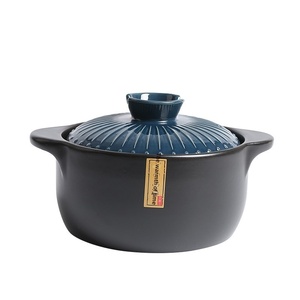
Commercial Use Non-Stick Ceramic Casserole Pot High-Temperature Resistant Korean Style Glazed Lid
Send an Inquiry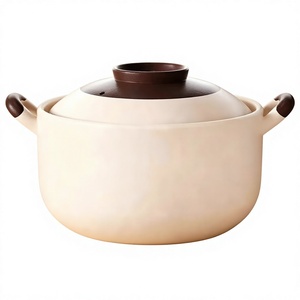
Flat Bottom Clay Rice Casserole High Temperature Resistant Ceramic Pot with Ceramic Lid
Send an Inquiry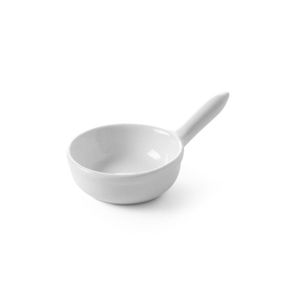
HENDI 6-Piece Ceramic Casserole Dish Set with Heat-Resistant Sauce Pans for Appetizers
Send an Inquiry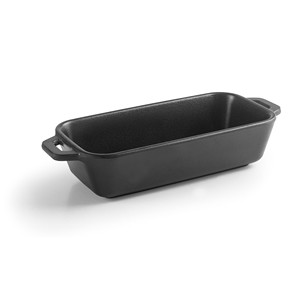
Rectangular Minimalist Casserole Dish Mini Cocotte Black 11x6x3 Ceramic Non-Stick Oven Safe
Send an Inquiry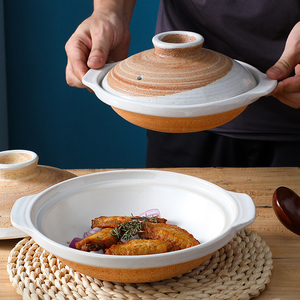
Two-Tone Shallow Ceramic Casserole Pot Double-Handle High Heat Resistant Clay Pot
Send an Inquiry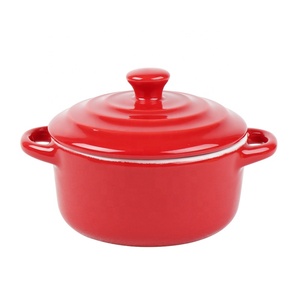
Colorful Round Mini Cocotte Cookware Ceramic Casserole Dish for Microwave
Send an Inquiry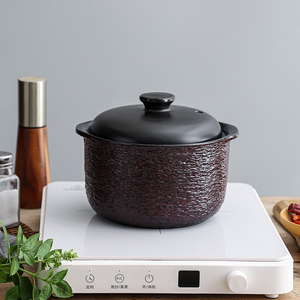
Japanese Style Heat Resistant Gas Induction Compatible Ceramic Stoneware Donabe Pot
Send an Inquiry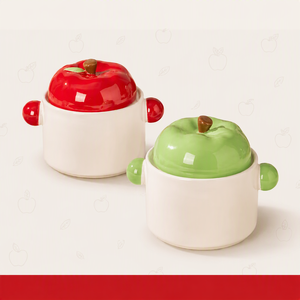
Cute Apple Shaped Ceramic Casserole Bowl with Lid 480ml Porcelain Stew Pot
Send an InquiryIndustry Whitepaper: Engineering Next-Generation OEM Ceramic Cookware
The global culinary cookware market is undergoing a seismic paradigm shift toward non-toxic, inorganic, and thermally efficient ceramic stoneware. As commercial food chains, international brand owners, and department store procurement directors navigate tightening global chemical safety mandates (such as EU Food Contact Regulation EC 1935/2004, US FDA CPG Sec. 545.400, and California Proposition 65), traditional cookware materials face increasing scrutiny. Fluoropolymer-based non-stick coatings (PTFE/PFAS) are being phased out in favor of natural mineral-glazed ceramics and lithium-rich spodumene clay bodies capable of withstanding extreme thermal shock.
As a premier OEM/ODM ceramic casserole manufacturer and global exporter, our engineering facilities utilize advanced mineral formulations combining high-purity Australian spodumene ore, kaolin clay, feldspar, and quartz. This precise metallurgical-ceramic synergy yields a material with an ultra-low coefficient of thermal expansion ($\alpha \le 1.5 \times 10^{-6}/\text{K}$), preventing micro-fracturing (crazing) during rapid temperature changes from $-20^\circ\text{C}$ deep freezing to direct $450^\circ\text{C}$ open flame or induction burner exposure.
Comparative Material Analysis: High-Lithia Ceramic Stoneware vs. Traditional Cookware
| Performance Metric | High-Spodumene Ceramic (Our OEM) | Traditional Earthenware / Clay | Cast Iron / Enamel Cookware |
|---|---|---|---|
| Thermal Shock Tolerance ($\Delta T$) | $\ge 450^\circ\text{C}$ (Direct flame to ice water) | $\le 180^\circ\text{C}$ (Prone to cracking) | $\le 220^\circ\text{C}$ (Enamel chipping risk) |
| Heavy Metal Migration | 0% Lead, 0% Cadmium (Vitreous Glaze) | Variable (High porosity risks leaching) | Cadmium risks in low-grade pigments |
| Heat Retention Metric ($C_p$) | $1.08 \text{ J/g}\cdot\text{K}$ (Sustained infrared radiation) | $0.92 \text{ J/g}\cdot\text{K}$ (Moderate retention) | $0.46 \text{ J/g}\cdot\text{K}$ (Rapid exterior heat dissipation) |
| Hob Compatibility | Gas, Electric, Oven, Microwave, Thermal-Spray Induction | Gas Only (Prone to hot spots) | Gas, Electric, Induction (Heavy weight) |
| Commercial Dishwasher Cycle Life | > 2,500 Cycles (Non-porous glaze matrix) | < 150 Cycles (Glaze degradation) | < 500 Cycles (Rusting at exposed rims) |
Global Procurement Trends in Ceramic Casseroles (2025–2030)
To maintain competitive market positioning, B2B procurement managers and private-label distributors must align their product sourcing with structural shifts in consumer lifestyle and commercial catering environments. Industry data indicates five key procurement trends shaping the 2025–2030 ceramic casserole landscape:
1. Dual-Fuel & Universal Induction Integration
Historically restricted to gas flames and ovens, modern ceramic casseroles are rapidly integrating plasma-sprayed stainless steel magnetic bottoms or ceramic-metal composite bases. This technical breakthrough allows ceramic donabes and braisers to operate effortlessly on induction cooktops ($1800\text{W}-3500\text{W}$) without sacrificing the natural far-infrared radiation ($FIR$) properties of clay cooking.
2. HORECA Miniaturization & Tabletop Serving
High-end hospitality and restaurant chains are shifting from kitchen-to-plate plating toward kitchen-to-table casserole service. Mini cocottes ($250\text{ml}-600\text{ml}$) and multi-tone glazed soup pots allow individual portion control, elevated presentation aesthetics, and heat retention that keeps entrees hot throughout a diner's meal.
3. Reactive Glazing & Tactile Matte Finishes
Monochromatic high-gloss glazes are increasingly replaced by custom reactive glazes, dual-tone gradient dips, and tactile matte stoneware textures. OEM custom firing processes enable subtle color variations that give mass-produced commercial ceramics an artisan, handcrafted appeal demanded by premium retail brands.
4. Non-PFOA Inorganic Surface Passivation
Consumer demand for zero-chemical cookware has made crystalline, micro-smooth ceramic glazes a core selling point. By sintering glazes at $1320^\circ\text{C}$, the surface vitrifies into a zero-porosity shield that naturally resists oil absorption, prevents bacterial harboring, and enables effortless release without synthetic spray coatings.
OEM Technical Capabilities & Customization Workflow
As a fully integrated contract manufacturer operating over 500+ product lines and supported by a team of 3,500+ specialized technicians, our manufacturing facility provides end-to-end OEM and ODM services customized to exact B2B specifications.
Customization Capabilities Matrix
Customized mineral ratios (Spodumene content from 30% to 55%) based on target heating source (Flame, Electric, Induction, Microwave).
Precision Pantone spectral matching, matte, glossy, speckled, reactive dip glazes, and high-scratch-resistance food-safe finishes.
Self-basting interior lid spikes, steam vent pressure valves, hollow anti-scald side handles, and stainless steel knob integration.
Underglaze logo silk-screening, laser-engraved bottom stamps, ISTA-6A drop-test certified mail-order packaging, and color retail boxes.
Why Partner with Kiam Metal Industries / Edel Kitchens?
Established in 1990 at the BSCIC Industrial Estate, Kushtia, Bangladesh, Kiam Metal Industries Limited has expanded into Bangladesh's premier cookware manufacturer and global exporter. Backed by 34+ years of industrial expertise, state-of-the-art high-pressure ceramic slip-casting equipment, and continuous computer-controlled tunnel kilns, we serve over 30,000 retailers and international B2B importers across North America, Europe, the Middle East, and Southeast Asia.
Send an InquiryB2B Procurement & Sourcing FAQ
Detailed answers regarding technical specifications, minimum order quantities, testing standards, and OEM contract manufacturing.
What raw material formulation prevents thermal cracking in your casseroles?
We utilize a proprietary mineral blend rich in high-purity Australian spodumene ore ($\text{Li}_2\text{O}\cdot\text{Al}_2\text{O}_3\cdot4\text{SiO}_2$). When fired at $1320^\circ\text{C}$, the lithium phase undergoes controlled crystallization, creating a ultra-low thermal expansion ceramic matrix. This allows our casseroles to safely transition from dry-burning at $450^\circ\text{C}$ directly into $20^\circ\text{C}$ water without thermal shock failure.
Can you manufacture induction-compatible ceramic casseroles?
Yes. We apply a specialized high-adhesion thermal plasma spray coating of magnetic stainless steel alloy to the flat ceramic base. This layer is then sealed with a protective anti-oxidation thermal glaze, enabling efficient electromagnetic coupling on standard B2B commercial and residential induction hobs.
What compliance certifications do your OEM ceramic products hold?
All our glazes and ceramic bodies undergo rigorous third-party testing (SGS, TÜV, Intertek) and strictly comply with US FDA CPG Sec. 545.400, California Proposition 65, EU Directive 84/500/EEC, and German LFGB food-contact standard for lead and cadmium migration.
What is the standard Minimum Order Quantity (MOQ) and production lead time?
Standard OEM production MOQ starts at 1,000 units per color/size for existing tooling, and 3,000 units for fully custom 3D molded shapes. Production lead times range from 30 to 45 days post-sample approval, supported by our massive 3,500-employee manufacturing capacity.
How do you safeguard fragile ceramic items during global maritime shipping?
We utilize custom-molded high-density EPE foam cradles and double-wall corrugated 200# master cartons engineered to pass ISTA 3A and ISTA 6-Amazon.COM drop tests. Pallets are shrink-wrapped and corner-board reinforced to eliminate breakage during sea transit and port handling.
What custom branding options are available for private label buyers?
We provide comprehensive private label options including underglaze decal firing (permanent logo integrated into the glaze), high-precision laser etching on stainless steel handles or lid knobs, custom color-matched Pantone glazes, and bespoke retail box design.