
OEM/ODM Restaurant Cookware Suppliers & Exporter
"Delivering engineered metallurgical performance, NSF/ETL compliant thermal efficiency, and high-volume OEM/ODM manufacturing capability for global commercial food service enterprises since 1990."
Featured Commercial Cookware Series
Explore our top-performing OEM/ODM cookware engineered specifically for heavy-duty commercial kitchens, hotel groups, and professional food service supply chains.
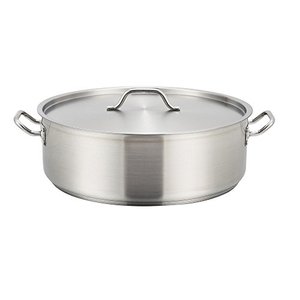
Enterprise Infrastructure & OEM/ODM Excellence
Backing global procurement managers with advanced metallurgy, scalable die-casting tech, and end-to-end supply chain reliability.
Precision Metallurgical Engineering
Equipped with high-tonnage hydraulic presses, gravity die-casting cells, and multi-layer tri-ply clad bonding machinery capable of producing heavy-duty commercial pans with zero thermal warping.
Global Standards & NSF Certification
Fully compliant with international food service standards including NSF, ETL, FDA, and EU food contact regulations. Rigorous laboratory testing ensures zero toxic emissions under continuous high-heat operations.
End-to-End Export Logistics
Operating from our expansive industrial manufacturing hub in Kushtia, Bangladesh, we seamlessly manage customs clearance, container consolidation, and bulk freight for global distributors in 50+ countries.
Commercial Cookware Sourcing Trends & Future Market Dynamics (2025–2030)
The global commercial kitchenware market is undergoing a structural transition driven by energy efficiency imperatives, stringent food safety standards, and the rapid adoption of high-efficiency induction cooking ranges in commercial HORECA (Hotel, Restaurant, and Catering) establishments. For bulk buyers, importers, and brand owners, choosing the right OEM/ODM manufacturer requires evaluating metallurgical precision, thermal conductivity, coating durability, and ergonomic safety.
1. The Shift to Tri-Ply Stainless Steel Cladding Tech
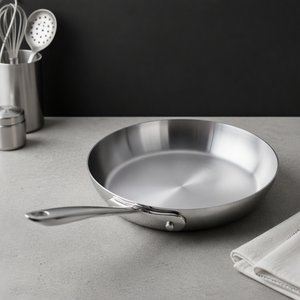
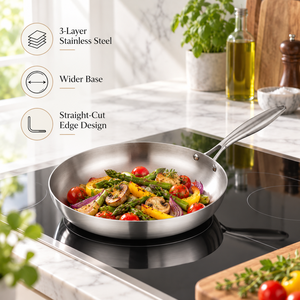
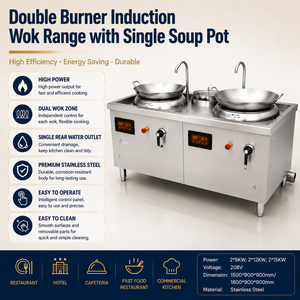
Traditional single-ply cookware or simple bottom-encapsulated pans fail under the thermal stresses of high-volume restaurant kitchens. Modern commercial procurement prioritizes 3-Ply (Tri-Ply) Clad Construction—typically featuring an inner layer of food-grade 304/18-10 Stainless Steel for hygiene, a thick pure aluminum core for rapid heat distribution, and an outer magnetic 430 Stainless Steel layer compatible with high-power induction cookers (such as 12KW commercial wok ranges).
- Thermal Response Time: Tri-ply pans eliminate hot spots by transferring heat uniformly up the sidewalls, reducing energy consumption by up to 28%.
- Warping Resistance: High-gauge wall construction (3.0mm thickness and above) prevents concave pan floor distortion under cold-water thermal shock in fast-paced dishwashing stations.
2. Advanced Non-Stick Formulations: PFOA-Free & High-Temp Durability
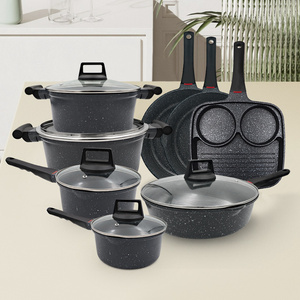
Commercial non-stick cookware faces extreme physical abrasion from continuous metal utensil contact and chemical degradation from acidic sauces. OEM/ODM buyers are shifting toward multi-layer ceramic-reinforced and titanium-infused PTFE coatings that offer 5-star abrasion ratings. Furthermore, integrated temperature-sensing handles prevent thermal breakdown by visually alerting kitchen staff when pans exceed safe cooking thresholds.
3. Cast Iron and Heavy Die-Cast Aluminum Resurgence
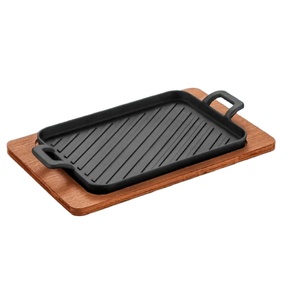
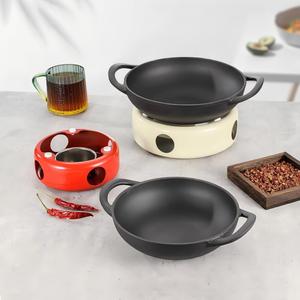
For specialized cooking techniques—such as high-heat steak searing, Korean barbecue, and slow-simmered Asian dry pots—traditional cast iron and heavy-gauge die-cast aluminum retain market dominance. Cast iron's thermal mass offers unmatched heat retention, while modern pre-seasoning treatments and alcohol/gas-fueled portable burner designs provide versatile tabletop service options for high-end dining environments.
Material Performance Matrix for Commercial Procurement
Compare key technical specs across primary commercial cookware categories to optimize your supply chain sourcing strategy:
| Cookware Material Type | Heat Distribution | Induction Efficiency | Durability Rating | Primary Commercial Applications |
|---|---|---|---|---|
| Tri-Ply Stainless Steel (3.0mm) | Exceptional (Uniform Sidewalls) | 98% (High Magnetic Response) | Heavy Duty (10+ Years) | Sauteing, Searing, Saucemaking, High-Volume Commercial Line Cooking |
| Die-Cast Aluminum | Fast Thermal Response | 90% (With Bonded Base Plate) | Medium-High Duty | Breakfast Lines, Egg Stations, Low-Fat Commercial Frying |
| Commercial Cast Iron | High Thermal Mass (Slow Heating) | 95% Direct Contact | Extreme (Lifetime Usage) | Steak Roasting, Sizzling Plates, Tabletop Dry Pots, BBQ |
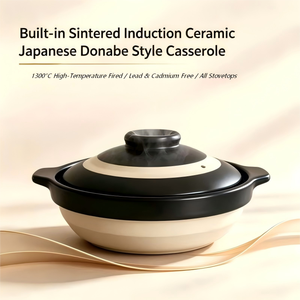
| Food-Grade Ceramic Cookware | Consistent Heat Retaining | 85% (Induction Disc Plate) | High Temperature Thermal Resistance | Korean Mini Pots, Stewing, Aesthetic Buffet Display Service |
Comprehensive Customization & OEM/ODM Workflow
Partnering with a specialized factory gives enterprise clients complete control over product engineering, brand aesthetics, and packaging security. Our turnkey manufacturing process spans five key phases:
- Phase 1: Tooling & Mold Engineering: Custom 3D CAD modeling, prototype rapid tooling, and volumetric testing tailored to your private label specifications.
- Phase 2: Metallurgical Alloy Selection: Choose from 201, 304, 316, or 430 stainless steel grades, high-purity primary aluminum ingots, or specialized gray cast iron alloys.
- Phase 3: Custom Handle & Rim Fabrication: Ergonomically engineered, cool-touch hollow handles, heavy-gauge spot-welded or riveted assemblies, and precision straight-cut rim finishing.
- Phase 4: Surface Coating & Finishing: Mirror polishing, satin brush, hard anodizing, sandblasting, or multi-layer non-stick coating application.
- Phase 5: Packaging & Drop-Test Certification: ISTA-certified export packaging, custom retail color boxes, barcoding, and palletized bulk shipping setup.
Commercial Procurement FAQs
Answers to common technical, logistics, and quality assurance questions from global restaurant supply buyers.
What is the minimum order quantity (MOQ) for custom OEM/ODM production runs?
Our standard MOQ for custom OEM production ranges between 500 to 1,000 sets per item size, depending on material complexity (e.g., custom tooling for die-cast pots vs. standard size tri-ply stainless steel frypans). Contact our sales engineering team for tailored project quotes.
Are your commercial cookware products certified for international health and safety codes?
Yes. All cookware lines comply with food contact regulations including US FDA, European Union (EU) 1935/2004, LFGB, ETL (for electrical commercial equipment), and NSF listing for sanitary kitchenware operation.
How does your factory ensure non-stick coating adhesion and longevity?
We utilize automated sandblasting to create optimal surface anchor profiles before applying multi-layer non-stick coatings. Every batch undergoes rigorous cross-hatch adhesion testing, salt spray corrosion tests, and wood spatula abrasion testing.
Can you supply cookware designed specifically for high-power commercial induction cookers?
Absolutely. Our tri-ply stainless steel series and induction-base die-cast cookware feature flat, heavy-gauge magnetic bottom plates compatible with high-wattage commercial induction ranges up to 12KW without warping.
What handle attachment method is best for heavy restaurant use: Riveted or Spot Welded?
Both methods offer distinct advantages. Riveted handles offer structural durability under heavy loads, while high-tensile multi-point spot welding creates a seamless, easy-to-clean interior surface without food trap rivets. We manufacture both based on buyer preference.
What are the lead times for sample development and bulk order shipment?
Sample development takes 7–14 business days for standard items and 25–35 days for custom tooling. Mass production order fulfillment typically requires 30–45 days from sample sign-off and deposit receipt.
Ready to Upgrade Your Commercial Cookware Supply Chain?
Connect directly with our senior manufacturing engineering team to discuss volume pricing, custom tooling, product samples, and OEM/ODM partnership opportunities.