
Featured Commercial Stock Pots & Cookware Systems
Engineered for high-volume foodservice operations, hospitality chains, and industrial catering. Explore our top OEM/ODM commercial stock pots and high-performance kitchenware.

Wholesale 201 Stainless Steel Pan 3.0mm Thickness for Restaurant Use
Get a Quote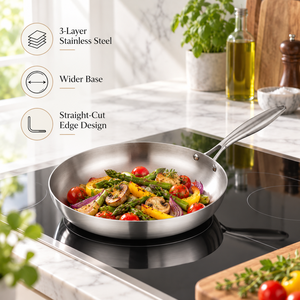
Professional 3 Ply Stainless Steel Stock Pot Wide Base Straight Cut Rim
Get a Quote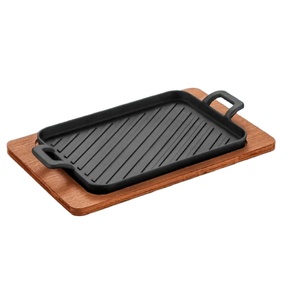
Cast Iron Double-Handle Commercial Stock & Braising Cookware Pot
Get a Quote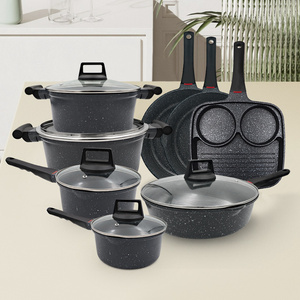
Die Cast Aluminium Non-Stick Commercial Soup & Stock Pot Set
Get a Quote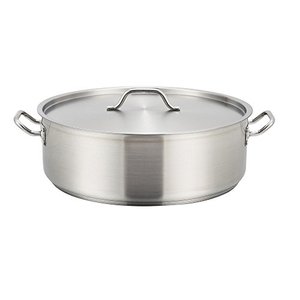
NSF Listed Commercial Stainless Steel Electric Stock & Boiling Pot
Get a Quote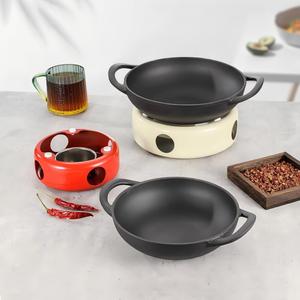
Commercial Cast-Iron Dry-Pot & Stock Cookware Double Handles
Get a Quote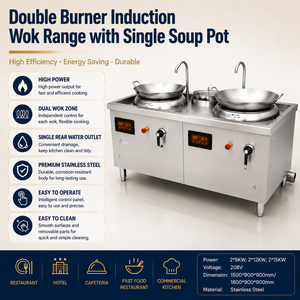
Commercial 12KW ETL Induction Cooker Station with Industrial Stock Pot
Get a Quote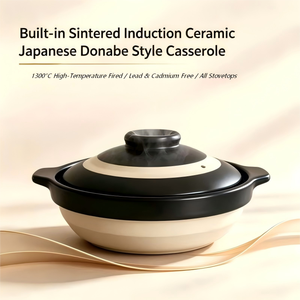
Commercial High-Temp Resistant Ceramic Stock Pot Induction Compatible
Get a QuoteGlobal Stock Pot Procurement & Manufacturing Whitepaper
In the globalized commercial kitchenware market, selecting a qualified stock pot supplier requires a thorough technical evaluation of material metallurgy, heat transfer kinetics, structural rim design, and international regulatory compliance. Commercial stock pots represent the workhorse of institutional catering, hotel banquet facilities, and food processing plants. Unlike consumer cookware, commercial-grade stock pots are subjected to continuous thermal cycling, high-saline liquids, acidic stock reductions, and aggressive mechanical cleaning regimes.
This industry whitepaper provides global B2B procurement managers, cookware distributors, and OEM brand buyers with actionable criteria to benchmark the top stock pot suppliers worldwide. By examining deep-drawing aluminum processes, tri-ply cladding technologies, automated TIG welding for solid rivetless handles, and compliance with NSF/ANSI Standard 2 for food equipment, buyers can optimize supply chain efficiency while guaranteeing extended product lifecycles.
Metallurgical Analysis: Selecting the Ideal Alloy Matrix
When negotiating bulk supply contracts with a professional stock pot supplier, understanding material grades is essential for balancing unit economics against corrosion resistance and thermal responsiveness.
AISI 304 (18/8) Stainless Steel
The gold standard for commercial stock pots. Contains 18% Chromium and 8% Nickel, offering superior resistance against organic acids (citric, acetic) and saline solutions. Ideal for slow-simmering stocks, tomato sauces, and acidic boiling applications.
AISI 201 Commercial Grade
Formulated by replacing a portion of Nickel with Manganese and Nitrogen. Offers higher tensile strength and lower raw material costs. When engineered at 3.0mm thickness with encapsulated aluminum impact-bonded bases, 201 steel provides high cost-performance for price-sensitive high-volume contracts.
Die-Cast Aluminum & Tri-Ply Clad
Tri-Ply cladding bonds an aluminum core between outer magnetic stainless steel (for induction compatibility) and inner food-grade steel. Die-cast aluminum delivers non-stick versatility, rapid thermal propagation, and lightweight handling in fast-paced commercial kitchens.
B2B Material Comparison & Engineering Benchmark Matrix
| Material Construction | Thermal Conductivity (W/m·K) | Corrosion Resistance | Induction Efficiency | Target B2B Application |
|---|---|---|---|---|
| Tri-Ply Clad (SS304 / Al / SS430) | 160 – 210 | Exceptional (5/5) | 94% (Optimal) | Luxury Hotels, Fine Dining, Institutional Kitchens |
| 3.0mm AISI 201 + Encapsulated Base | 120 – 150 | High Commercial (4/5) | 88% (High) | Restaurant Chains, Catering Companies, Volume Export |
| Die-Cast Heavy Aluminum (Non-Stick) | 200 – 237 | Moderate/Coating Dependent | 82% (Steel Plate Base) | Fast-Casual Dining, Breakfast Stations, Soups |
| Commercial Cast Iron (Enameled) | 45 – 55 | High (Glass-Vitreous) | 90% (High Thermal Retention) | Braised Meats, Slow Stews, Table-Side Service |
Future Sourcing & Manufacturing Trends (2025–2030)
As the commercial cookware sector adapts to stringent environmental standards and rising energy costs, stock pot suppliers are adopting next-generation manufacturing technologies. B2B procurement professionals must align with suppliers integrating the following structural developments:
1. Induction-Coupled Multi-Layer Bottoms
Commercial kitchens are rapidly transitioning from open gas burners to high-efficiency induction ranges (such as 12KW wok and stock pot stations). Top suppliers utilize automated impact-bonding presses generating over 2,500 tons of pressure to fuse 5.0mm aluminum discs with magnetic AISI 430 stainless steel caps. This eliminates air gaps and prevents delamination under extreme thermal shock.
2. PFOA & PFAS-Free Ceramic Non-Stick Composites
Regulatory mandates across North America and the EU (including REACH and EPA guidelines) are forcing the elimination of legacy PTFE coatings. Advanced stock pot suppliers are coating aluminum stock pots with inorganic sol-gel ceramic matrixes reinforced with diamond or titanium micro-particles, extending non-stick lifespan by 300% under commercial dishwashing stress.
3. Automated Robotic Welding & Hygienic Rims
Hygienic standard NSF/ANSI 2 requires cookware to be free of food-trapping crevices. Leading suppliers have replaced traditional interior rivets with robotic multi-point spot welding and TIG stud welding. Furthermore, dripless pouring rims created via precision spin-forming protect exterior pot walls from grease accumulation.
Need Custom Stock Pot OEM/ODM Specifications?
Consult with our metallurgical engineers for custom dimensions, handle ergonomics, and brand customization.
Enterprise Competence: Kiam Metal Industries Limited
As a world-class cookware manufacturer and premier global stock pot supplier, Kiam Metal Industries Limited has set the standard for kitchenware engineering since its establishment in 1990. Operating from an expansive, modern industrial complex in the BSCIC Industrial Estate, Kushtia, Bangladesh, Kiam operates integrated metal processing, deep-drawing, die-casting, and coating facilities.
Integrated Manufacturing Base
Over 3,500 dedicated employees operate automated heavy hydraulic presses, CNC trimming lines, and continuous fluoropolymer/ceramic spray lines. Our end-to-end supply chain control guarantees unmatched batch consistency and competitive FOB pricing.
Rigorous Quality Assurance
Every batch of commercial stock pots undergoes rigorous testing, including handle torque resistance, coating cross-hatch adhesion testing, salt-spray corrosion chamber tests, and thermal distortion analysis to ensure compliance with NSF, ETL, and FDA international benchmarks.
Global Export & B2B Distribution
Trusted by over 30,000 retailers and international importers, Kiam offers full OEM/ODM support, custom packaging design, flexible container consolidation, and export logistics tailored to buyers across Asia, Europe, Africa, and the Americas.
Frequently Asked Questions (B2B Sourcing Guide)
Below are answers to critical procurement questions asked by wholesale buyers, commercial equipment distributors, and hotel procurement directors when sourcing commercial stock pots.
Partner with Bangladesh's Premier Stock Pot Manufacturer
Navigating global cookware supply chains requires a trusted supplier that combines engineering precision, scalable manufacturing capacity, and transparent export logistics. With over 34 years of industry leadership, 500+ product lines, and state-of-the-art manufacturing infrastructure in Kushtia, Kiam Metal Industries Limited provides international distributors, restaurant supply chains, and private label brands with high-performance stock pot solutions.
Ready to Elevate Your Cookware Procurement?
Contact our international business division today for technical datasheets, factory audit reports, and direct factory pricing.