
Featured Export Equipment & Commercial Cookware
Engineered to exceed NSF and ETL compliance standards, our heavy-duty commercial kitchen equipment provides unmatched thermal efficiency, operational durability, and precise temperature regulation for global HORECA buyers.

Global Manufacturing Scale & Rigorous Quality Assurance
Established as an industrial powerhouse since 1990, our state-of-the-art production hubs integrate precision metal stamping, die-casting, automated surface coating, and rigorous ETL/NSF compliance testing under ISO 9001/14001 frameworks.
Commercial Cookware Material Performance Matrix
Choosing the right cookware substrates and thermal conductive layers directly affects kitchen output speed, energy consumption, and lifecycle cost per unit dish served.
| Cookware Material Class | Thermal Conductivity (W/m·K) | Structural Deformation Point | Induction Efficiency Rate | Ideal HORECA Operational Use |
|---|---|---|---|---|
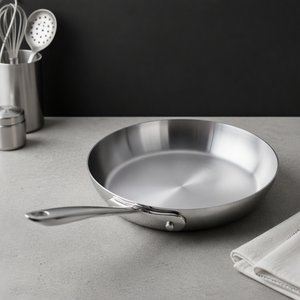
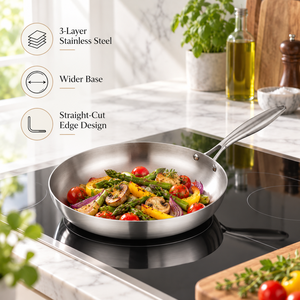
| Tri-Ply Clad (304 Stainless / Alu / 430 SS) | 160 – 210 W/m·K | > 850°C Heavy Stress | 94.8% Premium | Heavy-Duty Sautéing, Acidic Reduction Sauces, Continuous Searing |
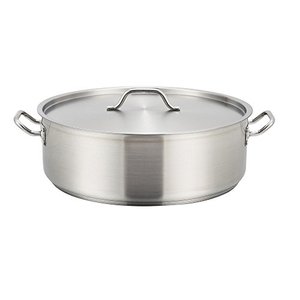
| 3.0mm Heavy Gauge SUS201 Stainless | 15 – 20 W/m·K (Direct) | > 750°C Standard | 88.2% Standard Base | High-Volume Restaurant Frying, Stock Cooking, Cost-Effective Buffets |
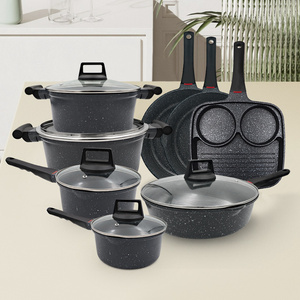
| Die-Cast Aluminum with Temperature Core | 205 – 230 W/m·K | > 550°C Controlled | 91.5% Magnetic Base | Delicate Non-Stick Omelets, Low-Fat Asian Stir-Fry, Fast Heat Distribution |
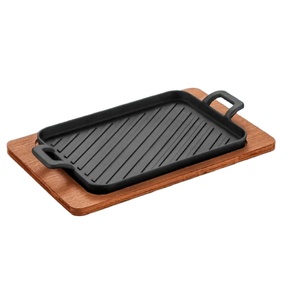
| Enamelled / Heavy Seasoned Cast Iron | 45 – 55 W/m·K | > 1100°C Thermal Inertia | 92.0% High Retention | Commercial Barbecue Steaks, Korean Table Hot-Pot, Slow-Simmered Stews |
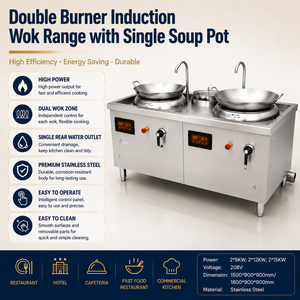
| High-Frequency Commercial Induction (2*12KW) | Direct Electromagnetic Coupling | Solid-State Circuitry | 96.5% Ultra-High | High-Volume Wok Stations, Rapid Soup Boiling, Zero-Flame Kitchens |
Future Procurement Trends in Commercial Catering Equipment
As global commercial kitchens pivot toward decarbonization, strict sanitation compliance, and reduced labor overhead, four key technological macro-trends are transforming B2B catering equipment procurement.
High-Power Induction & Kitchen Electrification
With stringent global regulations restricting indoor gas emissions, commercial kitchens are converting to high-power commercial induction ranges (such as dual 12KW ETL models). These systems reduce ambient kitchen temperatures by up to 60%, drastically cutting HVAC cooling costs while elevating thermal transfer efficiency to over 95%.
Multi-Ply Cladding & Ergonomic Engineering
Procurement officers are moving away from single-ply pans to bonded 3-ply and 5-ply stainless steel vessel designs. Featuring encapsulate aluminum cores, wide bases, and straight-cut rim handle heights, these pans eliminate hot spots, resist thermal warp under fast water quenching, and reduce operator fatigue during long shifts.
Non-Toxic PFAS-Free Ceramic Coatings
Environmental health standards across Europe and North America demand PTFE/PFAS-free non-stick solutions. Commercial die-cast cookware integrated with high-temperature resistant ceramic or inorganic mineral matrices ensures toxic-free cooking at temperatures exceeding 450°C without risk of surface degradation.
Precision Thermal Monitoring & Smart Handles
Incorporating visual color-changing silicone indicators or micro-sensor thermal probes directly into pan handles allows kitchen staff to verify preheating temperatures instantaneously. This eliminates oil burning, standardizes dish quality across restaurant chains, and extends cookware lifespan.
Modular & Multi-Functional Tabletop Appliances
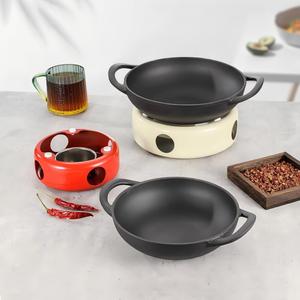
Modern dining experiences demand versatile equipment such as alcohol-fueled retro dry-pots, Korean electric mini cooking pots, and portable ceramic induction sets. These compact, aesthetic systems allow tableside service while maintaining strict NSF hygiene standards.
Lifecycle Cost Optimization (TCO Focus)
B2B catering equipment procurement has shifted from initial purchase price evaluation to Total Cost of Ownership (TCO). High-durability 3.0mm SUS201/304 gauge bodies and cast iron cookware yield multi-year operational life cycles, eliminating frequent replacement cycles in high-intensity commercial venues.
Why Top Global Brands Source Catering Equipment from China
China’s catering equipment manufacturing ecosystem offers unprecedented supply chain integration—combining raw metal refining, automated CNC tooling, electronic induction assembly, and international certification testing in single industrial clusters.
End-to-End OEM/ODM Manufacturing
From rapid 3D prototyping and custom mold engineering to laser etching branding and custom retail box packaging, Chinese exporters streamline custom production cycles from concept to container loading within 30 days.
International Compliance Guarantee
Leading China exporters maintain dedicated compliance labs ensuring all equipment strictly adheres to North American ETL Sanitation, NSF Listed Standard 2, European CE, FDA, and LFGB food safety guidelines.
Volume Scalability & Cost Efficiency
Leveraging high-volume automated stamping presses and robotic polishers, top suppliers achieve massive economies of scale—delivering commercial-grade 3.0mm stainless steel and 3-ply cookware at highly competitive B2B wholesale pricing.
B2B Sourcing & Technical Equipment FAQs
Clear answers to critical questions faced by commercial equipment importers, hospitality procurement managers, and wholesale distributors.
Request Complete B2B Export Catalog & Wholesale Price List
Connect directly with our senior commercial catering equipment engineers. Download our 2025 product catalog featuring detailed metallurgical specifications, ETL/NSF certification reports, and bulk container FOB pricing.