B2B Global Sourcing White Paper & Factory Guide

Top China Diecast Pan Factories & Suppliers

An Executive Analysis of Die-Cast Aluminum Engineering, Commercial OEM/ODM Procurement Trends, and Technical Evaluation Standards for Global Distributors

Top Recommended Die-Cast & Commercial Cookware

Curated high-efficiency cookware solutions engineered for global wholesale, commercial kitchens, and enterprise distribution networks.
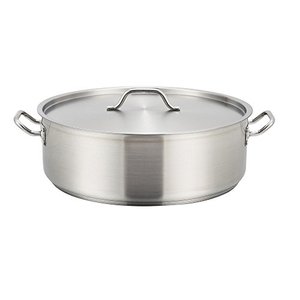
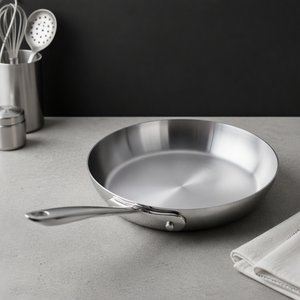
Commercial Grade Wholesale 201 Stainless Steel Pan 3.0mm Thickness

Wholesale 201 Stainless Steel Pan Stainless Pans Steel Frying Pan 3.0mm Thickness for Restaurant Use

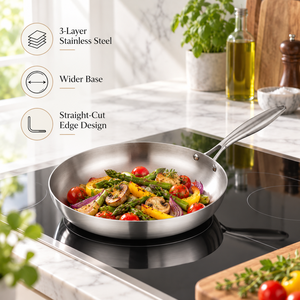
Tri-Ply Tech Professional 3 Ply Stainless Steel Frying Pan

Professional 3 Ply Stainless Steel Frying Pan Wide Base Straight Cut Rim Handle Height for Commercial Kitchen Cooking

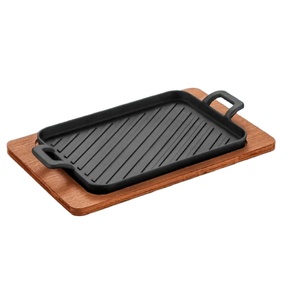
Heavy-Duty Cast Iron Rectangular Double-Handle Pan

Cast Iron Rectangular Double-Handle Induction Cooker Roasted Meat Steak Commercial Barbecue Cookware Cast Iron Cooking

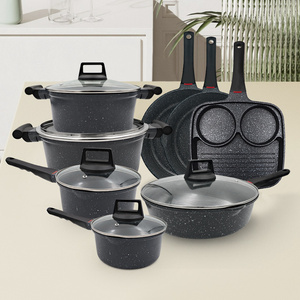
Die-Cast Innovation SANLANG Non Stick Induction Cookware Sets

SANLANG Wholesale Non Stick Pan Induction Cookware Sets Pots Die Cast Aluminium Cookware Set With Temperature Control Handle

NSF Certified NSF Listed Korean Commercial Mini Cooking Pot

NSF Listed Korean Commercial Electric Stainless Steel Mini Cooking Pot for Restaurant

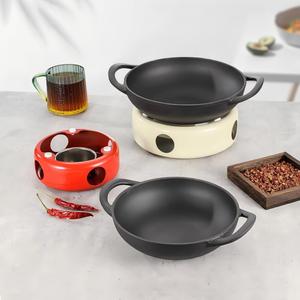
Authentic Style Commercial Cast-Iron Stir-Fry Wok

Commercial Cast-iron Wok Stir-fry Pan Two Handles Dry-pot Cookware Restaurant-specific Pot Alcohol-fueled Chinese-style Retro

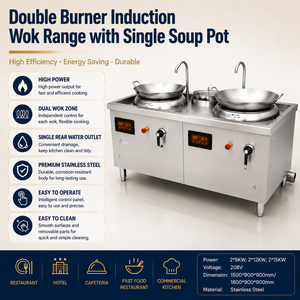
ETL High Power Commercial Wok Range 2*12KW Induction Cooker

Commercial Wok Range for Restaurant Kitchens 2*12KW ETL Induction Cooker with Single Soup Pot

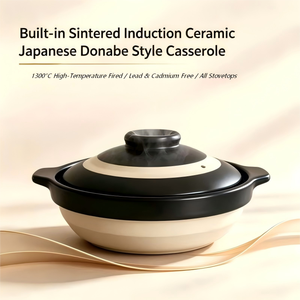
High-Temp Resistant Japanese Style Ceramic Pot Set

Japanese Style Handmade Ceramic Ceramic Pot Induction Commercial-Grade High-Temperature Resistant Durable Multiple Cookware Set

34+
Years Manufacturing Experience
500+
Active Product Lines
3,500+
Skilled Factory Personnel
30,000+
Global Retailers & Importers

Executive Overview: The Evolution of China's Die-Cast Aluminum Cookware Manufacturing

The global cookware market is undergoing a seismic shift driven by demand for thermal efficiency, non-toxic food contact surfaces, and long-term mechanical durability. As professional buyers evaluate Top China Diecast Pan Factories & Suppliers, understanding the underlying metallurgy, structural advantages of high-pressure die casting, and multi-layer coating matrix engineering becomes essential for procurement success.

Unlike traditional stamped or cold-forged aluminum cookware, die-cast aluminum pans are produced by injecting molten aluminum alloy under extreme pressure (often exceeding 800 to 1,200 metric tons of clamping force) into complex steel molds. This process eliminates internal air pockets, aligns the crystalline grain structure, and allows for variable wall thickness distribution—placing extra mass at the heavy thermal base while maintaining refined sidewalls for optimized weight-to-heat ratio.

Industrial Benchmark: Our Manufacturing Legacy & Core Advantages

Anchored by over 34 years of metallurgical expertise (established in 1990) and operating across specialized industrial production zones, our manufacturing ecosystem powers kitchenware procurement for enterprise clients across North America, Europe, the Middle East, and Southeast Asia. With over 3,500 qualified technicians and an expansive industrial footprint, we maintain an annual capacity exceeding millions of cookware units spanning die-cast aluminum frypans, casseroles, pressure cookers, and commercial induction ranges.

ADC12 Premium Metallurgy

We utilize certified ADC12 / A380 ingot aluminum free from scrap contaminants, delivering superior tensile strength and preventing thermal warping under rapid heat cycling.

Advanced Spray Coating Lines

Fully automated robotized application of multi-layer PTFE, ceramic, and granite nanocomposite matrices yielding over 40,000 cycles of LGA dry abrasion resistance.

Precision Induction Base Bonding

Integrated high-tonnage thermal stamping of 430 stainless steel impact-bonded bases, guaranteeing 100% full-surface induction connectivity without delamination risk.

Technical Innovation Trends in Die-Cast Pan Manufacturing

As international regulatory frameworks like EU REACH, US FDA, and California Proposition 65 tighten rules on chemical safety, die-cast pan suppliers in China are pioneering next-generation materials engineering. Commercial procurement directors must align their sourcing strategies with three primary technical vectors:

1. PFAS-Free & Sol-Gel Ceramic Coatings

Transitioning toward inorganic ceramic non-stick formulations derived from silicon dioxide (SiO2). These non-toxic coatings withstand extreme temperatures up to 450°C without blistering or releasing toxic fumes.

2. Plasma Titanium & Diamond Reinforcement

Thermal spray plasma technology melting titanium particles onto the die-cast substrate at 20,000°C creates an ultra-hard interlocking primer layer that triples non-stick pan lifespan in high-volume hospitality environments.

3. Full-Cavity Induction & Micro-Porous Heat Sinks

Replacing traditional spot-welded steel discs with micro-perforated or spray-deposited ferromagnetic coatings that accelerate induction heating speed by 28% while lowering unit pan weight.

Material Performance Benchmark: Die-Cast vs. Forged vs. Stamped Aluminum

Evaluation Parameter High-Pressure Die-Cast Aluminum Cold-Forged Heavy Aluminum Stamped Sheet Aluminum
Base & Wall Thickness Ratio Engineered variable (e.g. 5.0mm base / 2.5mm rim) Semi-uniform (3.5mm – 4.5mm base) Uniformly thin (1.8mm – 2.5mm)
Structural Resistance to Warping Exceptional (No internal stress) Moderate to High Low (Prone to thermal distortion)
Heat Retention & Thermal Distribution Optimal thermal mass & zero hot-spots Good, but heavier weight ratio Fast heat-up, poor retention
Design & Handle Integration Integrated cast handles & pouring spouts Rivet or spot-weld attachments only Riveted handles only
B2B Unit Cost Efficiency (High Volume) High tool cost / Excellent per-unit economy Moderate tool cost / Moderate unit cost Lowest tool cost / Commodity pricing

Future Sourcing & B2B Procurement Trends (2025–2030)

Navigating global supply chain volatility requires institutional procurement buyers to move beyond initial FOB price negotiation. When establishing long-term OEM/ODM manufacturing partnerships with Chinese die-cast factories, leading global brands focus on the following systemic purchasing trends:

Modular Tooling & Rapid Customization

Top Tier China factories now offer interchangeable mold insert systems. Distributors can customize handle attachment profiles, rim designs, and lid seatings without bearing $25,000+ complete mold development fees.

Sustainable Recycled Aluminum (Secondary Alloys)

ESG compliance has entered kitchenware sourcing. Importers are requesting certified 100% post-consumer recycled aluminum ingots, reducing embodied carbon by up to 95% compared to primary smelting.

Direct-to-Consumer (D2C) Ready Packaging

Suppliers are integrating ISTA-6A drop-test certified mail-order packaging lines within the assembly plant, allowing Amazon FBA sellers and omni-channel retailers to ship directly without re-boxing.

Frequently Asked Questions: Sourcing Die-Cast Cookware from China

Below are authoritative technical answers addressing common operational, quality assurance, and contractual questions encountered by B2B buyers, product managers, and supply chain directors.

Q1: What is the standard Minimum Order Quantity (MOQ) for custom die-cast aluminum pan production?
For standard catalog items with existing tooling, typical factory MOQs start at 1,000 to 2,000 units per color/size combination. For custom OEM shapes requiring dedicated mold creation, MOQs generally start at 3,000 units per item to amortize machine setup and coating line calibration costs efficiently.
Q2: How do you verify non-stick coating durability and food safety compliance?
Quality assurance testing involves rigorous protocols: British Standard BS EN 12983-1 for handle strength and thermal hazards, LGA testing (40,000+ abrasion cycles using abrasive pads under load), 5% NaCl salt spray corrosion testing (ASTM B117), and food contact compliance testing (FDA 21 CFR, EU 1935/2004, LFGB) verified by third-party laboratories such as SGS or TĂśV Rheinland.
Q3: What is the lead time for mold development and sample production?
3D CAD modeling and mold flow simulation require 3 to 5 business days. Tooling fabrication (using high-hardness H13 steel for die-cast dies) takes approximately 25 to 35 days. Initial T1 off-tool samples are usually delivered within 7 days post-tooling completed, followed by coating application and final customer sign-off.
Q4: Can die-cast aluminum pans be rendered 100% compatible with induction cooktops?
Yes. Die-cast aluminum is naturally non-magnetic, so an auxiliary ferromagnetic layer is applied to the base. Top factories use either friction-welded stainless steel (AISI 430) perforated discs or high-velocity thermal spray coating of magnetic alloy powders to ensure high thermal efficiency on induction cooktops.
Q5: What handle attachment methods offer the best balance of safety and commercial longevity?
Die-casting allows integrated aluminum side handles (flanges) cast seamlessly with the body. For long handles, cast-in stud inserts or precision heavy-duty flame guards with stainless steel hex bolts are preferred over rivets, as they maintain a smooth, hygienic interior cooking surface free from rivet heads that collect food grease.
Q6: How does die-cast cookware compare in shipping weight and container utilization?
Die-cast pans are slightly heavier than stamped aluminum but significantly lighter than cast iron. Because wall thickness is optimized during casting, a 28cm die-cast pan typically weighs between 900g to 1,200g. Nesting designs and stackable lid handles optimize master carton dimensions, achieving up to 5,500 units per 40ft HQ container depending on packaging configuration.
Q7: What custom branding and logo placement techniques are available?
Branding techniques include embossed or debossed logos molded directly onto the bottom stainless steel induction disc, laser-etched logos on sidewalls or handles, custom silicone-printed bottom logos, and custom cast logos on stainless steel lid knobs.
Q8: What quality control checkpoints are implemented during mass production?
Standard QC flow includes: Raw material spectrographic alloy analysis -> X-ray non-destructive inspection of cast blanks for internal porosity -> Automated surface grinding & deburring check -> Curing temperature graph logging on coating lines -> Cross-hatch adhesion testing (ASTM D3359) -> Thermal shock testing (heating to 200°C and quenching in cold water) -> Final 100% visual assembly inspection.

Partner with China's Premier Die-Cast Cookware Manufacturer

Elevate your product line with certified food-safe non-stick coatings, engineered thermal efficiency, and reliable OEM/ODM factory capacity. Contact our B2B engineering team today for instant quotes and custom mold inquiries.