1. Engineering Standards in Commercial Cooking Pot Manufacturing: Material Metallurgy & Thermal Performance
Selecting premier commercial cooking pots for high-volume foodservice operations, wholesale distribution, or brand-labeled retail requires a rigorous evaluation of material physics, thermal kinetics, and structural resilience. Modern commercial kitchens place extreme mechanical and thermodynamic stress on cookware. As a trusted cookware manufacturer and global exporter established in 1990, Kiam Metal Industries Limited operates at the intersection of metallurgy and industrial kitchen design.
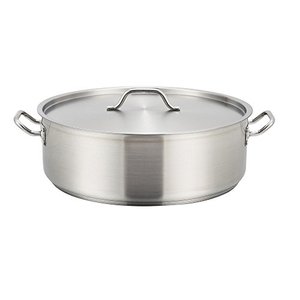
In high-intensity culinary environments, thermal transfer efficiency directly correlates with energy consumption and cooking consistency. Heavy-gauge materials such as 3.0mm 201 stainless steel, 304 food-grade stainless steel clad around pure aluminum cores, pressure die-cast aluminum alloys, and high-density grey cast iron represent the pinnacle of commercial kitchenware engineering. Understanding these metallurgical nuances ensures procurement directors optimize inventory durability while minimizing life-cycle replacement costs.
Key Engineering Insight: Heat distribution performance is governed by material thermal conductivity ($\lambda$). While copper and pure aluminum possess exceptional conductivity (205 W/m·K), their structural soft state necessitates cladding or alloy pressure die-casting. Multi-ply encapsulated technology combines the thermal velocity of aluminum with the inert, non-corrosive, and high tensile strength of austenitic stainless steel.
Metallurgical Comparison Matrix for B2B Cooking Pot Procurement
The matrix below outlines the critical mechanical properties and compliance standards across dominant commercial cooking pot manufacturing alloys:
Cookware Material Grade
Thermal Conductivity (W/m·K)
Tensile Strength (MPa)
Induction Compatibility
Corrosion Resistance Index
Primary Commercial Application
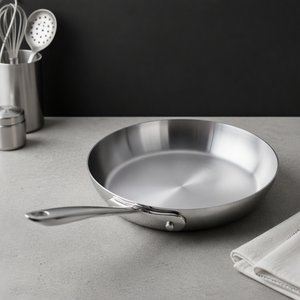
3.0mm Gauge 201 Stainless Steel
16.3 W/m·K
520 MPa
Yes (Enclosed Magnetic Base)
Moderate (Dry & Oil Cooking)
High-Volume Stock Pots, Wholesale Fry Pans
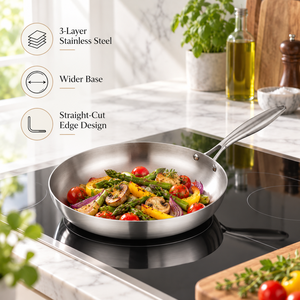
Tri-Ply Clad (304-Alu-430)
150 - 180 W/m·K
600+ MPa
Native (430 Outer Layer)
Highest (Acidic Soups & Saline Solutions)
Professional Chef Saucepan & Sauté Range
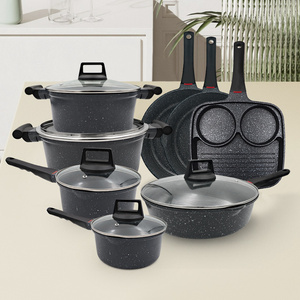
Pressure Die-Cast Aluminum
120 - 160 W/m·K
240 MPa
Yes (Integrated Stainless Disk)
High (PTFE / Ceramic Barrier)
Non-Stick Casseroles, Commercial Braisers
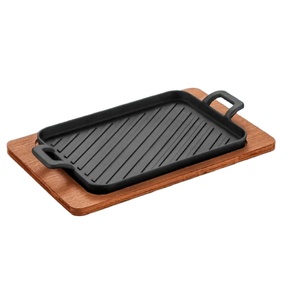
High-Density Grey Cast Iron
52 W/m·K
200-350 MPa
Native Direct Coupling
Moderate (Requires Seasoning/Enamel)
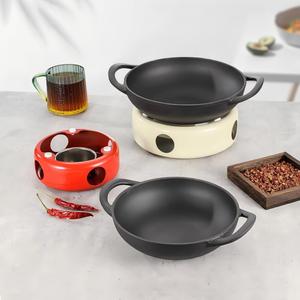
High-Heat Searing, Sizzler & Dry-Pot Dishes
High-Thermal Shock Ceramic
3.5 W/m·K
120 MPa
Option (Micro-Ferrite Base Layer)
Impervious (Zero Metallic Leaching)
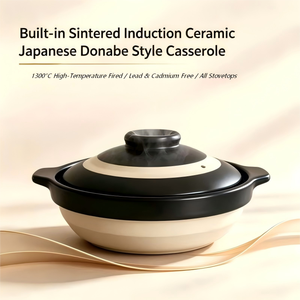
Slow Stewing, Table-Side Serving Vessel
Each material profile offers distinct physical advantages. For instance, commercial stock pots fabricated with a 3.0mm thickness resist bottom bowing (thermal warp) under sustained 12-hour gas flame burner cycles, whereas lightweight 1.2mm pots warp rapidly, creating thermal hot-spots that ruin delicate food prep. Kiam Metal Industries' manufacturing processes utilize automated hydraulic deep-drawing presses to guarantee precise bottom flatness within 0.05mm tolerances across all batch runs.
2. Global Procurement & Future Technology Trends in Cooking Pot Manufacturing (2025-2030)
As international regulatory frameworks tighten and commercial kitchens transition toward energy-efficient electrification, the global cooking pot supply chain is experiencing significant technological transformations. Importers, brand owners, and hospitality sourcing managers must realign their procurement strategies with four key market macro-trends:
1. High-KW Induction Optimization
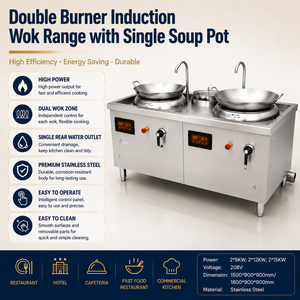
Commercial kitchens are abandoning open-flame gas ranges in favor of 5KW to 12KW high-power induction cookers. Future-ready cooking pots require magnetic stainless steel bottom plates with thermal expansion joints to eliminate magnetic detachment under extreme electromagnetic induction fields.
2. Gen-3 Sol-Gel Ceramic Coatings
With global regulatory phases banning PFOA, PFOS, and restricted PFAS chemistries, non-stick cooking pots are adopting advanced inorganic Sol-Gel ceramic matrix coatings. These coatings deliver 450°C thermal stability, zero toxic emissions, and 10x greater scratch resistance compared to traditional PTFE coatings.
3. Smart Thermal Control Interfaces
Ergonomic pot handles are integrating thermo-chromic visual sensors and heat-insulating hollow-core stainless castings. These features visually indicate when cooking pots reach ideal sear temperatures while protecting kitchen operators from burn hazards without reliance on rubber sleeves.
Furthermore, global buyers are seeking supply chain diversification beyond traditional manufacturing hubs. Sourcing from Bangladesh—specifically established leaders like Kiam Metal Industries Limited—offers significant tariff advantages, competitive labor efficiency, and direct access to state-of-the-art automated production facilities built across our 34+ years of industrial evolution.
3. OEM/ODM Factory Capabilities & International Compliance Assurance
As Bangladesh's premier cookware manufacturer based in the BSCIC Industrial Estate, Kushtia, Kiam Metal Industries Limited operates an integrated enterprise infrastructure spanning over 3,500 dedicated personnel. Our modern production complex houses advanced manufacturing technologies designed to satisfy stringent international B2B buyer specifications:
Automated Deep Drawing & Stamping
High-tonnage hydraulic presses capable of forming heavy 3.0mm stainless steel and extra-thick aluminum discs with absolute wall-thickness uniformity and zero structural stress fractures.
Robotized Spray Coating Lines
Cleanroom automated multi-coat applicator systems for ceramic and PTFE non-stick treatments, backed by infrared curing tunnels ensuring maximum coating adhesion and abrasion longevity.
Metrology & Quality Inspection Labs
In-house quality control testing including X-ray fluorescence alloy analysis, cross-hatch adhesion tests, salt-spray corrosion chamber testing, and thermal shock degradation cycles.
All exported cooking pots comply fully with major international sanitation and safety standards, including NSF/ANSI Standard 51 for food equipment materials, FDA 21 CFR compliance, European LFGB regulations, and ETL/CE electrical safety certifications for integrated commercial heating units.
4. Frequently Asked Questions (FAQ) for Cooking Pot Importers & Wholesalers
Below are authoritative responses to the most critical technical, commercial, and logistical questions raised by global B2B procurement managers when sourcing commercial cooking pots:
What is the structural advantage of a 3.0mm thickness pan compared to standard 1.5mm or 2.0mm options?
A 3.0mm wall and bottom gauge provides significantly higher structural rigidity and thermal mass. Under commercial kitchen conditions—where pots endure immediate temperature shifts from cold ingredients to high gas flame burners—thinner metals (1.5mm–2.0mm) undergo thermal shock expansion, leading to base warping ("convex bowing"). A warped pan causes uneven contact with cooking surfaces, leading to severe hot-spots and burned food. 3.0mm heavy-gauge construction guarantees structural planarity, even heat distribution, and extended service lifespan.
How does Tri-Ply Stainless Steel cookware differ from impact-bonded encapsulated base cookware?
Tri-Ply cookware features a continuous 3-layer sandwich construction (typically 304 food-grade stainless inside, pure aluminum core, and 430 magnetic stainless outside) extended all the way up the side walls to the rim. This delivers uniform heat conduction throughout the entire cooking vessel. In contrast, impact-bonded cookware only features a heavy thermal disk attached to the bottom, leaving the side walls as single-ply steel. Tri-Ply offers superior temperature control for delicate sauces and reduces cooking times by up to 25%.
Can Kiam Metal Industries customize cookware specifications for Private Label OEM/ODM orders?
Yes. As a primary manufacturer, Kiam offers turnkey OEM/ODM solutions. Our engineering team accommodates custom mold tooling, handle casting designs, bottom induction plate laser etching, custom color ceramic/PTFE exterior finishes, tailored gauge thicknesses, and private retail packaging. Minimum Order Quantities (MOQs) for custom OEM production generally start at 1,000 units per item size depending on tooling requirements.
Are non-stick cooking pot coatings compliant with modern international environmental and health laws?
All non-stick coatings applied at our manufacturing plant—including classic PTFE formulations and advance ceramic coatings—are strictly certified 100% PFOA-free, PFOS-free, lead-free, and cadmium-free. They meet or exceed US FDA 21 CFR 175.300 and European LFGB food contact safety regulations, rendering them entirely safe for worldwide distribution.
What are the lead times, packaging options, and shipping terms for international export shipments?
Standard OEM production lead time is 30 to 45 days following artwork approval and deposit confirmation. Products are packaged in heavy-duty 5-ply corrugated export cartons with individual protective bubble-wrapping or color gift boxes. We support standard shipping terms including FOB Chittagong Port, CFR, CIF, and DDP to major international ports worldwide.
Partner with Bangladesh's #1 Cooking Pot Manufacturer
Leverage 34+ years of factory expertise, 500+ product lines, and high-volume commercial production capabilities for your brand or wholesale inventory.