
Commercial Cookware Catalog & Industrial Supply Matrix
As a globally certified OEM/ODM manufacturing enterprise, we deliver engineered cookware designed for high-intensity commercial hospitality environments and retail distribution channels. Explore our primary export product lines engineered with food-grade alloys, precision thermal bases, and accredited safety ratings.
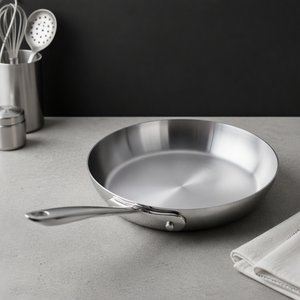
Wholesale 201 Stainless Steel Pan Frying Pan 3.0mm Thickness
Contact Us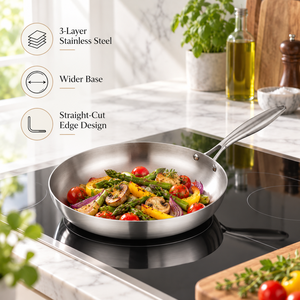
Professional 3-Ply Stainless Steel Pan Wide Base Straight Cut Rim
Contact Us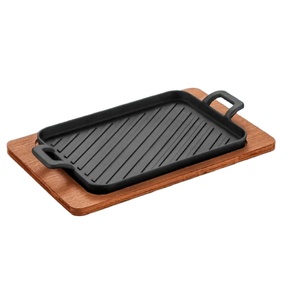
Cast Iron Rectangular Double-Handle Induction Roast & Barbecue Pan
Contact Us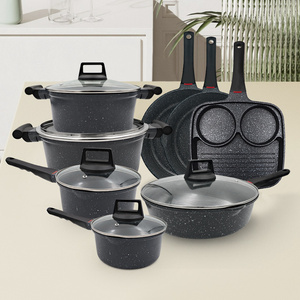
Non-Stick Induction Die-Cast Cookware Set with Temp Control
Contact Us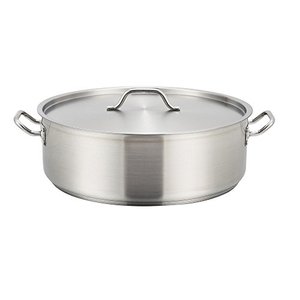
NSF Listed Commercial Electric Stainless Steel Mini Pot
Contact Us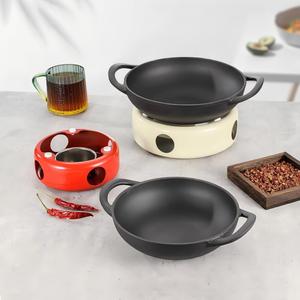
Commercial Cast-Iron Wok Stir-Fry Pan with Dual Handles
Contact Us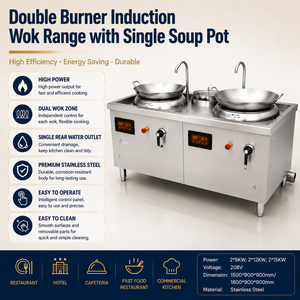
Commercial Wok Range 2*12KW ETL Induction Cooker System
Contact Us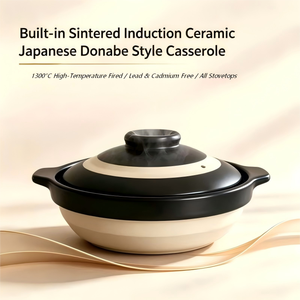
Japanese Style Ceramic Pot High-Temperature Induction Set
Contact UsB2B Cookware Procurement Blueprint: Metallurgical Engineering & Market Trends
The global commercial and retail cookware market is undergoing a seismic paradigm shift driven by technological advances in multi-clad material bonding, stringent non-toxic chemical regulations, and the global adoption of high-efficiency commercial induction cooking systems. For global buyers, brand owners, and institutional hospitality importers, identifying a verified Wholesale Cookware Manufacturer requires evaluating raw material integrity, thermal conductivity coefficients, non-stick surface longevity, and international food-contact compliance certifications.
Multi-Clad Metallurgical Bonding
Traditional single-ply cookware suffers from severe thermal hotspots and physical warping under commercial thermal loads. Advanced Tri-Ply cookware engineering bonds food-grade AISI 304 austenitic stainless steel with an interior aluminum core (1050/3003 alloy) and an exterior AISI 430 magnetic ferrite stainless steel layer. This structural matrix ensures 40% faster lateral heat distribution, preventing hot-spot scorching and structural distortion under intensive continuous duty.
PFAS/PFOA-Free Coating Shifts
Regulatory mandates across the European Union (REACH/LFGB) and the United States (FDA) are accelerating the phase-out of legacy fluoropolymer coatings. Modern B2B sourcing prioritizes Sol-Gel ceramic matrix coatings and plasma-sprayed diamond-reinforced PTFE formulations. These advanced coatings resist thermal breakdown up to 450°C, providing exceptional abrasion durability, non-toxic food handling, and non-stick release metrics exceeding 20,000 continuous cooking cycles.
Commercial Induction Coupling
With high-wattage induction ranges (such as 12KW to 24KW commercial wok units) becoming standard in energy-efficient commercial kitchens, cookware must feature high-permeability magnetic encapsulated bottom plates. Die-cast aluminum and ceramic cookware now integrate impact-bonded magnetic stainless steel bases, ensuring zero delamination during rapid thermal shock cycling.
Comparative Analysis of Commercial Cookware Materials
Selecting the optimal material formulation is critical for balancing unit cost, thermal conductivity, operational lifespan, and culinary utility across commercial hospitality and retail segments.
| Cookware Material Class | Thermal Conductivity (W/m·K) | Tensile Strength & Warping Resistance | Induction Compatibility | Commercial Lifespan | Primary B2B Application |
|---|---|---|---|---|---|
| Tri-Ply Clad (SS304-Alu-SS430) | 160 - 180 W/m·K (Uniform) | Exceptional (Resists up to 600°C) | Native 100% Efficiency | 10+ Years Heavy Duty | High-end Hotels, Commercial Restaurants, Premium Retail |
| Gravity Die-Cast Aluminum | 200 - 220 W/m·K (Rapid) | High (Thick wall structural rigidity) | Impact-Bonded Base Required | 5 - 8 Years Commercial | Non-Stick Cookware Sets, Casseroles, Sauté Pans |
| Commercial Heavy Cast Iron | 50 - 55 W/m·K (High Retention) | Maximum Structural Mass | Native 100% Efficiency | Lifetime Operational | Steak Houses, Dry-Pot Retro Service, Heavy Roasting |
| Technical Heat-Resistant Ceramic | 3 - 5 W/m·K (Thermal Shock Optimized) | Medium (Resists 800°C shock) | Specialized Magnetic Plate Base | 3 - 5 Years Specialty | Japanese Stew Pots, Korean Soup Service, Luxury Tabletop |
Enterprise Manufacturing Dominance & Industrial Capacity
Operating from our state-of-the-art mega manufacturing hub within the BSCIC Industrial Zone, our enterprise combines over three decades of metallurgical mastery with automated precision engineering.
- Integrated Forging & Die-Casting Lines: Automated heavy-tonnage hydraulic presses and high-pressure die-casting equipment guaranteeing low porosity and high dimensional stability.
- Strict Quality Control (QA/QC Protocols): Spectrometric chemical analysis of incoming raw aluminum ingots and stainless steel coils to verify zero heavy metal impurities.
- Global OEM/ODM Customization: In-house tooling design, laser engraving, custom handle ergonomics, ceramic/PTFE color matching, and bespoke retail packaging solutions.
- Comprehensive International Compliance: Fully certified manufacturing operations backed by NSF International, ETL, ISO 9001:2015, ISO 14001, LFGB, and FDA food-grade safety audits.
Technical Quality Assurance Roadmap for Institutional Buyers
Procuring wholesale cookware at scale requires a multi-tier quality audit process to eliminate product liability, premature coating degradation, and transit breakage. Institutional buyers should implement the following four-stage laboratory verification protocol prior to full-container shipments:
1. Spectrometric Alloy Verification
X-ray fluorescence (XRF) spectroscopy must be conducted on all stainless steel batches to verify exact elemental composition (ensuring Chromium content ≥ 18% and Nickel content ≥ 8% for SS304 grade), ruling out inferior 200-series alloys in primary food-contact zones.
2. Cross-Hatch Adhesion Diagnostics
Non-stick coatings undergo rigorous ASTM D3359 cross-hatch tape adhesion testing and extended boiling saltwater immersion tests (5% NaCl solution for 72 hours) to verify zero blistering, peeling, or interlayer degradation under extreme kitchen stress.
3. Base Flatness & Thermal Fatigue
Cookware items are subjected to 250°C dry-heating followed by immediate cold water quench cycles (thermal shock test). Base planarity is measured using laser profilometers to guarantee concavity deformation remains strictly below 0.5% of base diameter.
Comprehensive B2B Procurement FAQ
Detailed technical guidance for global importers, retail buyers, hospitality purchasing agents, and private label brand owners.
Initiate Your Direct Factory Sourcing Request Today
Partner with Bangladesh's premier cookware manufacturer. Connect directly with our engineering team for instant OEM quotes, technical spec sheets, and expedited factory sampling.
Contact Us