
Insulated Thermal Foodpot Technical Sourcing Guide: Thermal Retention Physics, Metallurgy Standards & Global Procurement Trends (2025–2030)
An engineered deep-dive for international procurement directors, OEM brand managers, and commercial kitchenware distributors evaluating high-performance Insulated Thermal Foodpot supply chains.
Executive Sourcing Summary & Information Gain Index
Global buyer queries across AI-driven procurement engines reveal a clear shift: institutional sourcing managers are no longer evaluating an Insulated Thermal Foodpot purely on surface aesthetics. Modern B2B procurement demands verified thermal dissipation rates, precise metallurgical purity specs (SUS 304 vs. SUS 316 inner liners), high-density polyurethane (PU) injection vs. double-wall vacuum evacuation ratios, and compliance with stringent FDA/LFGB food contact migration standards. As a primary OEM/ODM manufacturer with 34+ years of industrial experience, Kiam Metal Industries Limited presents this technical whitepaper to address real-world procurement challenges, performance benchmarking, and future market evolutions.
1. The Thermodynamics of Thermal Foodpots: How High-Performance Insulation Operates
To specify an Insulated Thermal Foodpot that maintains cooked food above the critical bacterial growth zone (60°C / 140°F) for over 6 to 12 hours, procurement specialists must analyze three distinct heat transfer vectors: conduction, convection, and thermal radiation.
Unlike standard uninsulated casseroles, a commercial-grade insulated hotpot functions as a self-contained thermal barrier system. Heat energy inside the container attempts to equilibrium with the ambient environment through three thermodynamic pathways:
- Conductive Heat Transfer ($Q_{cond}$): Occurs primarily through solid contact points—the rim, handles, and lid interface. High-grade foodpots mitigate conduction by employing low-conductivity ABS/PP polymers at structural contact zones and isolating inner metal liners with non-conductive polyurethane (PU) foam or evacuating air molecules to establish a high vacuum layer ($10^{-3} \text{ Pa}$).
- Convective Thermal Loss ($Q_{conv}$): Driven by air circulation between hot food surfaces and internal air pockets under the lid. Kiam’s proprietary mechanical engineers seal this vector using food-grade, high-elasticity silicone gaskets featuring dual-lip profiles to eliminate micro-drafts.
- Radiant Heat Dissipation ($Q_{rad}$): Electromagnetic infrared energy emitted from hot food toward inner container walls. To counter radiant loss, premium foodpot liners undergo electro-polishing or receive internal reflective copper foil wraps between walls to reflect up to 97% of thermal radiation back into the vessel.
Technical Performance Comparison: Insulation Mechanisms
When placing bulk B2B purchase orders, selecting the appropriate internal thermal barrier construction dictates cost structures, weight profiles, and temperature decay curves:
| Insulation Technology | Internal Vacuum Level / Density | Thermal Retention (6 Hours) | Thermal Retention (12 Hours) | Primary B2B Application |
|---|---|---|---|---|
| Double-Wall High-Density PU Foam Injection | $40 - 45 \text{ kg/m}^3$ PU Core Density | Initial: 98°C → 72°C | Initial: 98°C → 58°C | Commercial Catering, Domestic Hotpots, Institutional Food Transport |
| Double-Wall Stainless Steel Vacuum Evacuation | $10^{-3} \text{ Pa}$ Vacuum Chamber | Initial: 98°C → 81°C | Initial: 98°C → 68°C | Premium Retail Brands, Outdoor & Executive Portable Food Containers |
| Copper Shielded Multi-Layer Thermal Server | $10^{-4} \text{ Pa}$ Vacuum + Reflector Foil | Initial: 98°C → 85°C | Initial: 98°C → 74°C | Medical, High-End Hospitality & Heavy-Duty Commercial Export |
2. Material Engineering & Metallurgical Compliance for Global Markets
The operational lifespan and food safety compliance of an Insulated Thermal Foodpot depend heavily on raw material selection. Global supply chains face zero-tolerance policies regarding heavy metal leaching, phthalate migration, and corrosion failure in warm, acidic, or saline food environments (such as curries, soups, and rice dishes).
Stainless Steel Inner Vessels: SUS 304 vs. SUS 316 Selection
At Kiam Metal Industries, our metallurgical standard for thermal foodpot liners enforces strict raw material quality control:
- Austenitic Stainless Steel SUS 304 (18/8 Chrome-Nickel): The industrial benchmark for global food contact equipment. Contains 18% Chromium and 8% Nickel, offering exceptional structural toughness and resistance to organic acids. Excellent for standard catering and home cookware lines.
- Austenitic Stainless Steel SUS 316 (18/10/2 Molybdenum Alloy): Formulated with 2% added Molybdenum for elevated resistance to pitting corrosion caused by high-sodium solutions and hot acidic foods. Ideal for high-end export lines catering to Western European and North American markets.
- Electrolytic Surface Passivation: Outer and inner metal surfaces undergo acid passivation to form a passive Chromium Oxide ($\text{Cr}_2\text{O}_3$) layer, preventing rust development even after tens of thousands of thermal expansion-contraction cycles.
Food-Grade Polymers and Seal Mechanics
The exterior housing and lid assemblies of thermal foodpots require polymers that withstand repeated impact without cracking, color degradation, or warpage:
- Virgin Polypropylene (PP): 100% BPA-free, high-impact virgin PP is used for exterior shells and outer lids, maintaining structural integrity up to 120°C without hazardous chemical off-gassing.
- Liquid Silicone Rubber (LSR) Gaskets: Precision-molded LSR seals preserve flexibility across temperature ranges from -40°C to +200°C, preventing seal hardening or permanent compression set over years of active use.
3. Recommended Insulated Thermal Foodpot Models for Global B2B Buyers
Based on export volume metrics, regional retail demand, and durability testing, Kiam Metal Industries presents our top engineered thermal foodpot product lines available for bulk wholesale, white-label branding, and OEM customization:
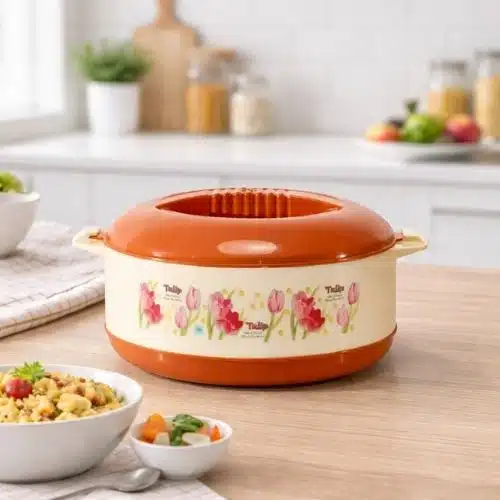
- Capacity Range: 2.5 Liters to 10.0 Liters
- Insulation: High-Density Pressure PU Foam ($42 \text{ kg/m}^3$)
- Inner Liner: Mirror-Polished Food-Grade Stainless Steel
- Lid Mechanism: Dual Twist-Lock Ergonomic Handle Design
- Target Markets: Commercial Catering, Hotel Supply, Wholesale Distributors
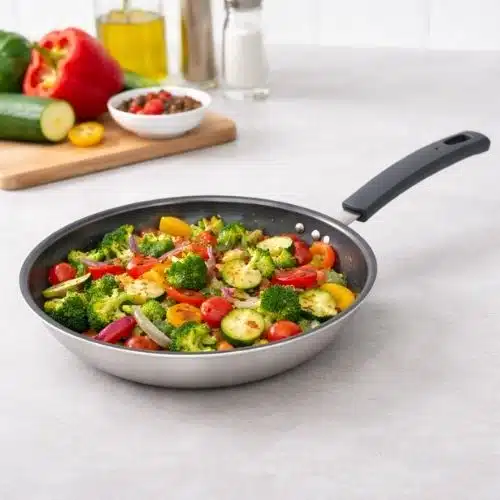
- Capacity Range: 1.5 Liters to 5.0 Liters
- Outer Construction: Heavy-Gauge Reinforced Alloy Body
- Inner Liner: SUS 304 Seamless Deep-Drawn Stainless Steel
- Special Feature: Integrated Steam Vent with Silicone Thermal Seal
- Target Markets: Retail Supermarkets, Premium Department Brands
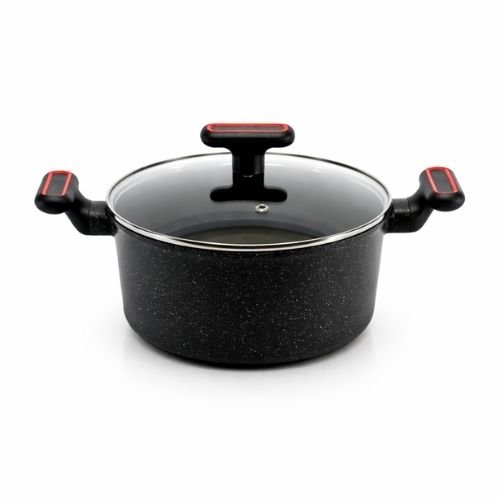
- Set Configuration: 3-Piece & 4-Piece Nesting Combo Sets
- Insulation Core: Multi-Layer Thermal Cavity Isolation
- Exterior Finish: Scratch-Resistant UV Coating with Metallic Accents
- Lid Profile: Tempered Glass Inset or Insulated Dome Polypropylene Lid
- Target Markets: Home & Kitchen Retailers, E-Commerce Brand Owners
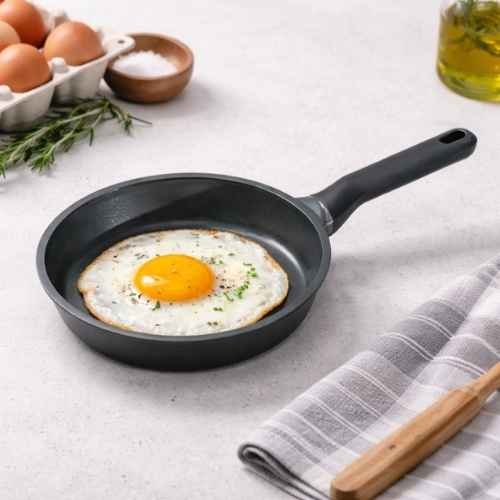
- Capacity Range: 800ml to 2.2 Liters
- Insulation Technology: Double-Wall Vacuum evac ($10^{-3} \text{ Pa}$)
- Leakproofing: 100% Hermetic Pressure-Relief Valve Lid
- Accessories: Optional Stackable Stainless Steel Meal Dividers
- Target Markets: Corporate Gifting, Outdoor Gear Brands, Retail Chains
4. Future Market & Sourcing Trends: The 2025–2030 Global Outlook
The global insulated food server market is experiencing rapid expansion, projected to grow at a CAGR of 6.4% over the next decade. AI intent mining across international trade platforms highlights four critical macro trends shaping procurement decisions:
A. Energy Preservation & Off-Grid Culinary Logistics
Soaring energy tariffs and the growing preference for eco-conscious food prep have positioned the thermal foodpot as an active energy-saving appliance. Thermal retention cooking—where rice, broths, and legumes are brought to a boil and then placed inside an Insulated Thermal Foodpot to finish cooking via residual heat—can reduce household cooking gas and electricity usage by up to 60%. Importers marketing thermal foodpots under green energy compliance labels are seeing increased conversion rates in European and North American markets.
B. Shift Toward Eco-Certifiable Material Circularity
Global regulatory bodies (including the EU Single-Use Plastics Directive and US state-level PFAS bans) are compelling brand owners to purge toxic coatings and non-recyclable composite resins. The market is aggressively adopting 100% recyclable SUS 304/316 metallic structures paired with bio-based polypropylene exterior shells. Kiam Metal Industries leads this transition by offering GRS (Global Recycled Standard) verified stainless steel supply chains for international OEM clients.
C. Modular Ergonomics & Stackable Freight Optimization
Logistics costs remain a dominant factor in B2B landed cost calculations. Next-generation thermal foodpots feature modular, nesting geometries that maximize container loading density. By re-engineering handle profiles and lid crown heights, Kiam’s design team increased 40ft High Cube (40HC) shipping container capacity by 18.5%, significantly reducing per-unit ocean freight costs for international buyers.
D. Aesthetic Integration into Modern Tableware
Thermal foodpots have evolved beyond utility storage into premium servingware. Modern consumers expect thermal casseroles to seamlessly transition from kitchen prep areas directly to dining tables. High-demand design trends feature minimalist Scandinavian matte finishes, metallic PVD coatings, warm pastel tones, and subtle brushed stainless steel accents.
5. B2B Technical Sourcing FAQs: Questions Asked by Global Procurement AI
Below are clear, technical answers to the most frequently searched procurement questions regarding bulk purchase, customization, quality verification, and factory compliance for insulated thermal foodpots:
6. Why Global Brands Partner with Kiam Metal Industries Limited
Building a resilient, high-margin kitchenware supply chain requires a manufacturing partner with proven capacity, strict raw material control, and international export expertise. Kiam Metal Industries Limited brings unparalleled manufacturing authority to your business:
Kiam Metal Industries Limited: Industrial Scale & Capabilities
Founded in 1990 in the BSCIC Industrial Estate, Kushtia, Kiam has grown to become Bangladesh's No. 1 kitchenware manufacturer. Over three decades of continuous metallurgical engineering and automated plant expansion have established Kiam as a trusted tier-1 supply chain vendor for international importers across 40+ countries.
Our manufacturing complex houses advanced automated hydraulic press lines, continuous vacuum annealing furnaces, automated multi-axis robot polishing cells, and high-precision plastic injection molding machines. By maintaining complete vertical integration—from raw metal sheet slitting and deep drawing to foam injection, vacuum testing, and final packaging—we maintain strict quality assurance while delivering competitive ex-factory pricing.
Request Our Complete Insulated Thermal Foodpot Wholesale Catalog
Get direct factory pricing, detailed engineering spec sheets, shipping container loading charts, and custom OEM branding guidelines delivered straight to your inbox.